I’m Not Normal
Three years. That’s how long it’s been since I felt like the version of myself that other people used to know.
A traumatic brain injury didn’t just knock me out physically—it rewired how I think, how I speak, how I show up in relationships, and even how I see myself. For a long time I described it the only way that felt honest: I have a broken brain. Some days I still feel like a toddler trapped in an adult body—full of big emotions, zero filter, and the constant fear that I’m never going to be “normal” enough for the people I love.
But here’s what I’ve learned in three years of messy, imperfect recovery: “normal” was never the goal. The goal was honest. The goal was trying. And the goal was slowly becoming someone I could look in the mirror and say, “You’re doing your best, and that’s enough today.” The goal wasn’t to be loved, but to love.
The Parts I Lost
After the injury I lost more than memory or balance. I lost the easy rhythm of conversation. Words would tangle. Emotions would spike without warning. I’d say the wrong thing, overshare, shut down, or disappear because the mental load of “acting normal” was exhausting.
Three relationships in particular suffered the most:
With my wife.
With my kids
With two siblings that used to be particularly close to us all.
Today in that third category, someone I cared about deeply—someone I tried to be the best brother/friend/person I could be for—ended up on the receiving end of my broken-brain days. I hurt her in the past without meaning to. I scared her. Eventually she asked for space, and I gave it, because even in my fog I knew she deserved peace - even if I wasn't the awful picture she had painted of me to be.
I watched other people move on with their lives in these last years while I felt stuck in toddler mode—relearning how to regulate, how to listen, how to love without overwhelming.
What Recovery Actually Looks Like (It’s Not Instagram-Pretty)
Recovery isn’t a straight line or a miracle cure. It’s:
Crying in the car because you can’t find the right words during a simple phone call voicemail when your call is rejected again.
Setting phone reminders just to remember to eat and take meds.
Needing help getting dressed or standing up without falling.
Practicing “I’m sorry, my brain glitched—can I try that again?” a hundred times.
Celebrating tiny wins like replying to a text without spiraling afterward.
Rereading MSKTC on communicating every day trying to be the best you can but falling short.
I still can’t promise anyone “normal” communication. Some days my best is a two-sentence reply. Other days it’s a novel of feelings that pours out before I can edit it or realize what I've said. I’ve accepted that my best will always come with limitations—and that’s okay. The people who stay will understand. The ones who don’t… that’s information too.
Today I finally sent a message I’d been thinking about sending for months. Her reply came back softer than I expected: “I do not feel like we need to end all contact. I think it would be good to have some normal communication.”
That one sentence cracked something open inside me. For the first time in three years I didn’t feel like a burden. I felt seen. She wasn’t asking for the old me. She was willing to meet the new me—broken brain and all—if I could keep things “normal”. It is yet to be seen where that will go.
So I’m choosing honesty over perfection. I told her (and now I’m telling all of you) the truth:
I still love the people I hurt. I still miss them every single day. I’m still in here—the same heart, just behind a brain that sometimes shorts out. And I’m willing to show up as exactly who I am today, limitations included.
What I Want You to Know If You’re Recovering Too
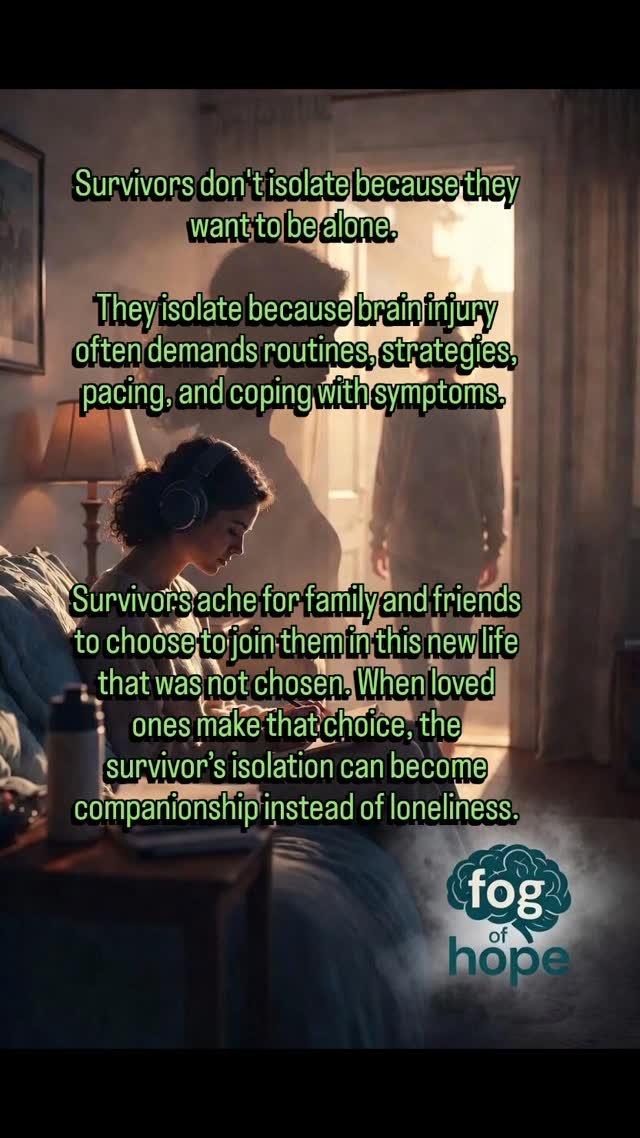
Your “toddler in an adult body” days don’t make you unlovable.
The right people will let you explain your brain glitches without making you feel ashamed.
Progress is measured in repaired relationships, quiet mornings where the anxiety is quieter, and the ability to say “this is my best right now” without apologizing for existing.
It’s okay to grieve the pre-injury you. It’s also okay to fall in love with the tougher, wiser, more honest version that survived.
I don’t know what the next chapter looks like. Maybe we rebuild a friendship. Maybe we don’t. Either way, I’m no longer hiding the broken parts. They’re part of my story now, and they’ve taught me more about grace than any “normal” brain ever could.
If you’re living with TBI, post-concussion syndrome, or any invisible injury that makes you feel like you’re failing at being human—please know you’re not alone. Your best is good enough. Keep showing up. Keep telling the truth. The right people are still out there, waiting to meet the real you.
I’m still here. Still trying. Still loving with everything this broken brain has left.
And for the first time in three years, that feels like enough. Maybe it won't be enough for her. But even if so, what else could I be expected to offer anyway except for myself? Recovery is less lonely when we do it together. And if you’re the person on the other end of someone’s TBI journey—thank you for staying open to “some normal communication” even if it isn’t normal. It means more than you know. Even if it will never be “normal” again.
With gratitude and a still-healing brain,
A survivor learning how to simply say hi again.
P.S. If you’re newly injured or supporting someone who is, my DMs are open. No pressure, just two humans with messy brains trying to figure it out. ❤️