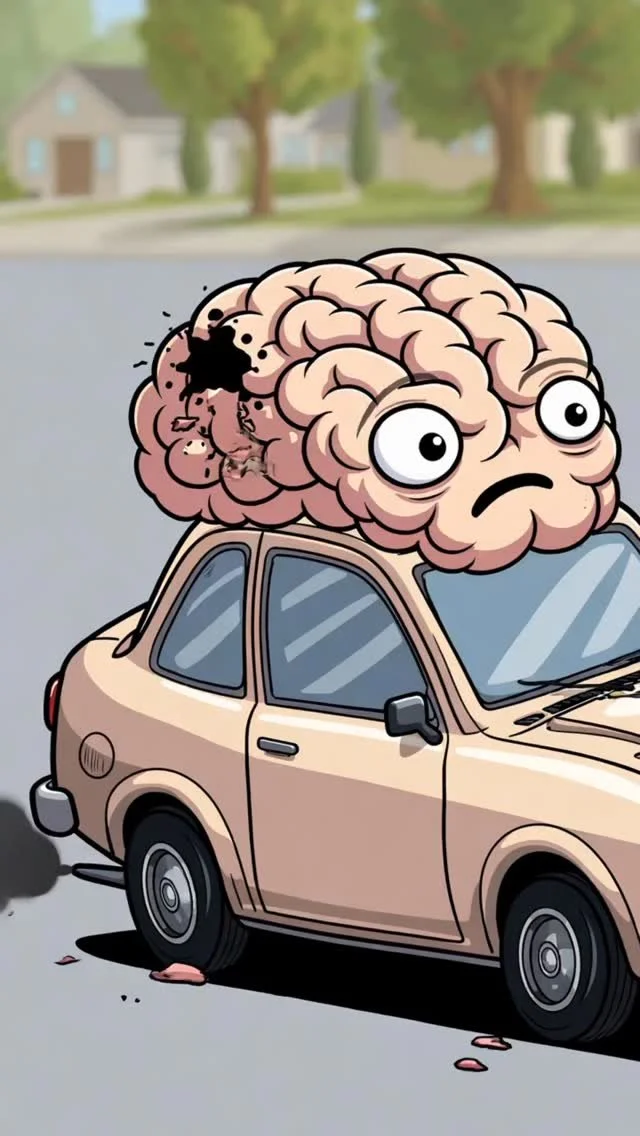
I’m Not Playing!
“Do you want to play ‘poke’?”
My four-year-old asked as he looked up at his sixteen-year-old cousin with wide, hopeful eyes. The cousin smiled and said eagerly yes. The rules were simple at first: one poke and you’re it. A made up game, but yet familiar - Tag, but with poking. Easy enough. “There’s only one rule” he assured his older cousin - “if you get poked - you become it and have to poke someone else”.
Within minutes, the rules multiplied. You couldn’t block escape paths. You couldn’t grab arms. If the poke was too hard, it didn’t count. New restrictions appeared with every round. The game became chaotic, unpredictable, and increasingly difficult to follow. Yet instead of getting frustrated, the older cousin kept playing. Joyfully playing even. When after a while the four-year-old got tired of his made up game of ‘poke’ and switched gears and asked instead, “Would you like to play ‘pinch’?” — the answer from his much older cousin was still a resounding “yes” with a chuckle.
Why? Because it was never really about the game. It was about the person across from him—the laughter, the connection, the shared joy of being together. Everyone in the room, from the little kids playing with their cousin to the watching adults, had a blast. The game itself was just a vessel. The willingness to adapt and enjoy each other made the real magic happen.
This scene has stayed with me because it mirrors so much of my own journey through brain injury recovery.
After my injury, everyday life started feeling like that ever-changing game of “poke.” The rules I once knew no longer applied. My brain processed information differently. Fatigue hit without warning. Emotions could surge or disappear. Conversations that used to flow easily sometimes felt like navigating a shifting maze. And in the middle of it all, my family dynamics shifted too.
As an older brother I used to play with my sisters regularly just like my son played with his much older cousin. Literally playing games such as that and as they grew up playing more mature games together. But in recent years they've answered no to playing even literal games together anymore. Not to mention the more important game of life together. It was never about the games when they were 5 or 15, it was always about enjoying the person, being together.
Now in this game of life over the last years, my sisters would change the “rules” of our interactions—sometimes subtly, sometimes dramatically. Often without even telling me. Plans would shift. Expectations would evolve but never be told to me despite my asking. Old patterns would resurface in new forms or be rejected by them just because they were ‘old’ even without wrongdoing in them. What worked one day to connect or communicate might frustrate or confuse the next. It was exhausting, disorienting, and at times deeply painful. They have simply answered now for years that they don't want to play.
Something in me has changed slowly through recovery. I found myself increasingly willing to adapt—to the changing rules, to the uncertainty, to whatever version of “the game” presented itself. I chose to stay engaged. To keep showing up - every single day. To adjust my approach, soften my expectations, and meet them with love however I could in that moment. I wanted connection more than I wanted consistent rules or the same game. I wanted to keep playing, even when the rules kept changing, even if it was a different game. Even if it was a game like “poke” or “pinch” that could even hurt if another player was playing wrong.
I was ready to grow with it. To change my responses. To prioritize the relationship over being “right” about how things should be.
And yet… they didn’t want to play. They still don’t. I mistook their wishes to leave them alone as a new rule to follow as if the game was still being played with a skip a turn happening. But the game ended years ago for them. They've simply decided I'm not worth playing with anymore in this game of life.
That was and is the hardest part. While I had learned—through the slow, humbling work of recovery—how to tolerate ambiguity, how to pivot with grace, and how to find joy in the unpredictable, not everyone around me was willing or able to do the same. Some relationships stayed frozen in old expectations. Some interactions ended in withdrawal when the “rules” no longer felt familiar or comfortable. Now they still tell me they don’t want to play. It hurt then and still hurts now. I can only imagine the look our four year old would have had if the cousin had instead said “no” instead of “yes” to those games together. He knew his cousin wanted to be with him and vice-versa. That's no longer true for my sisters these past years, they don't even get excited to play the game of life with our family anymore like they used to.
It hurts. There were moments I wanted to throw my hands up and say, “These aren’t the rules I agreed to.” “This isn’t the rule you just said” “I’m following what you told me” But the lesson from that silly children’s game my son just made up in that moment keeps echoing: the game is secondary. The people are what matter. They've made it clear the game isn't worth playing, I don't matter anymore, it doesn't matter what the game is they want to play, they're just not interested in having me be apart of it.
Recovery has taught me that healing isn’t just about regaining lost functions. It’s about expanding your capacity to handle life as it actually is—not as you wish it would be. I wish they wanted me in their life like we want them in ours. But they’ve been abundantly clear that no, they don’t want to play. Recovery is about building resilience in the face of constantly shifting conditions, whether those shifts come from your own brain, your body, your circumstances, or the people you love.
My four-year-old son didn’t care that the game made no sense. He was creating it in real time, and he was thrilled that someone wanted to join him in the chaos. The sixteen-year-old didn’t need the rules to be fair or logical. He just wanted to be with his little cousin.
I’m trying to carry that spirit forward despite those I love who don't want to play with me anymore. Some days I still get poked too hard. Some days the rules change mid-play and I stumble. But I’m learning to smile anyway, to stay in the game, and to value the togetherness more than the structure, even though they keep refusing to play. Some people that I wish I could play with are still saying, “I’m not playing”. That’s ok, although deeply saddening, we can play without them. After three years, it is still hard to accept but the game will be better without them when they have no interest in playing anyway.
If you’re in your own season of recovery—whether from brain injury, grief, illness, or any major life disruption—maybe this resonates. The rules keep changing - from others, yourself, or your situation. That’s okay. You don’t have to love the chaos, but you can choose to keep playing with love, curiosity, and adaptability with those who still choose to say “yes” to playing with you. And if some people choose not to join you in that space? That’s their game to play - or more aptly - lose. Yours is to keep becoming the person who can handle the shifts with grace and can join into the game with the ones who isntead do want to play.
The real win isn’t mastering the rules - they’re going to keep changing. It’s the relationships you build while the game is unfolding. Only the people playing with you will get to have those relationships. If they keep saying no, maybe its time to just start playing without them and let them miss out on what could have been one of the greatest games they could have played.
Here’s to staying in it. To saying “yes” even when it’s absurd like ”poke” or “pinch”. To choosing connection over control.
Because sometimes the most healing thing you can do is keep playing anyway - even when it hurts. — ”Poke!” — “Pinch!”