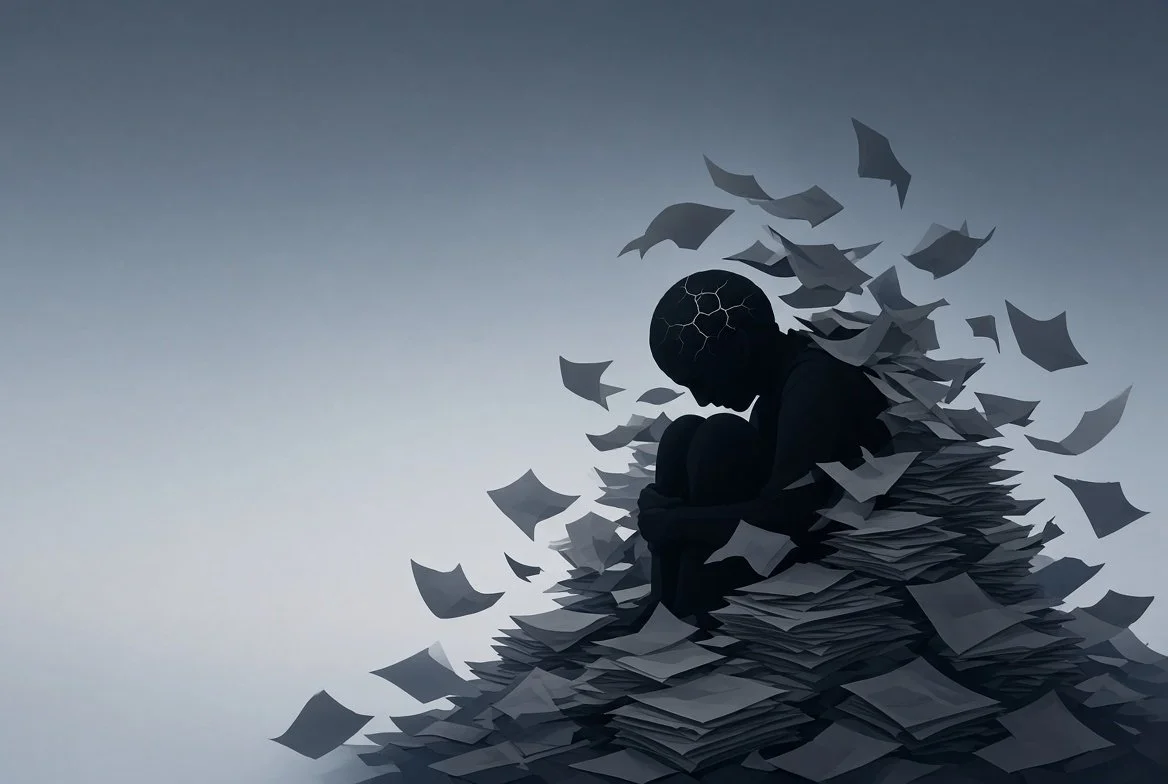
My Transmission is Shot
When Your Transmission Goes Out: What Car Trouble Taught Me About Living with a Brain Injury
We had a vehicle with a transmission starting to fail. The vehicle would act strange. The engine was revving, but the power wasn’t reaching the wheels the way it should. Shifting felt delayed and clunky. We made it home, but the warning lights came on, and we knew something was seriously wrong with the transmission.
After a painful diagnostic visit, the mechanic confirmed it: transmission is failing. Not a cheap or simple fix. The part that transfers power from the engine to the drivetrain was damaged, and without it, the vehicle couldn’t do what it was built for—even though the engine itself was still running strong. Sound familiar?
That moment hit me hard because it mirrored exactly what happened to my brain three years ago after my traumatic brain injury (TBI).
I’m Angry, But Why?
I’m Angry… But I Don’t Even Know What I’m Angry At
Some days after my TBI, I wake up with this heavy, restless anger simmering inside me.
There’s no clear target. No single person or event I can point to and say, “This. This is why I’m mad.” It’s just… there. A vague, foggy frustration that makes me irritable, short-tempered, and sometimes even angry at myself for feeling angry.
This is one of the strangest and most exhausting parts of brain injury recovery.
The Spoon Struggle
Why Spoon Theory Is Helpful… But So Hard to Grasp and Even Harder to Accept
If you live with a chronic illness, TBI, or post-concussion syndrome, you’ve probably heard of Spoon Theory.
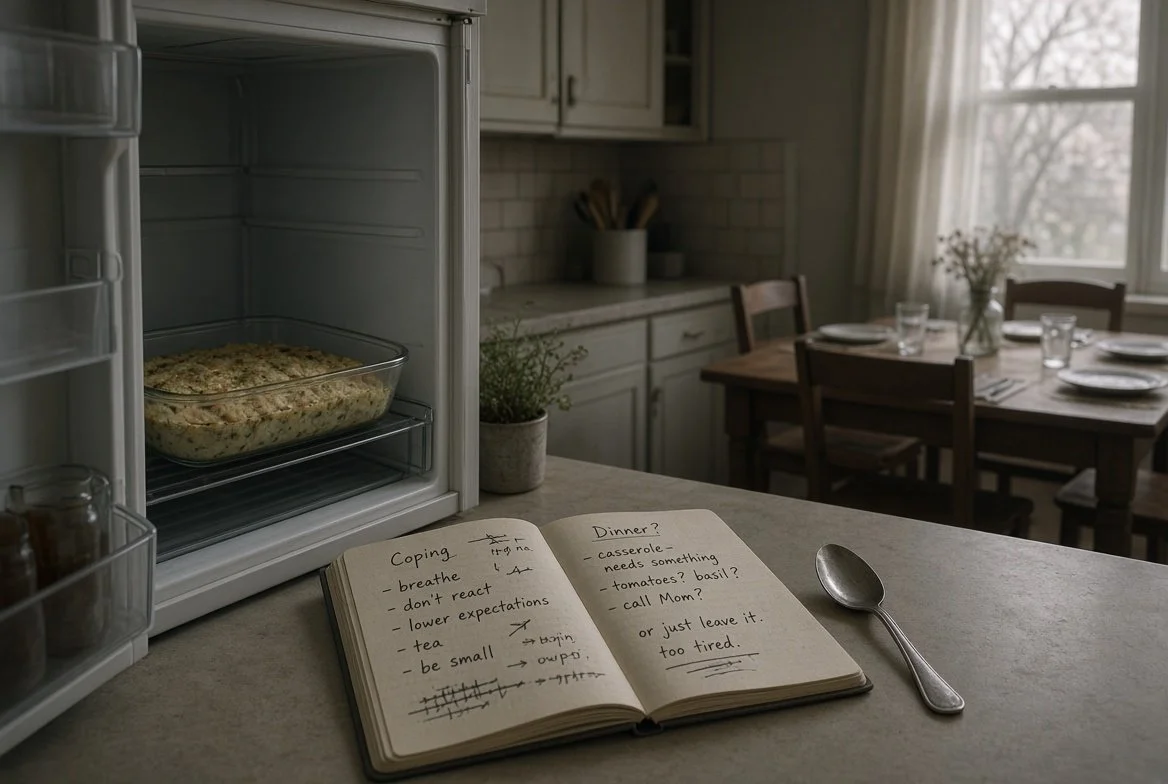
It was created by Christine Miserandino in 2003 to explain what it’s like to live with invisible illness. The idea is simple: you start each day with a limited number of “spoons” (units of energy). Every single task — getting out of bed, showering, making breakfast, answering a message, working, driving, even having a conversation — costs spoons. Once they’re gone, they’re gone. You can’t just borrow more.
On paper, it’s brilliant. In real life, it can feel both incredibly validating and yet deeply uncomfortable.
Sister’s Silent Engagement
When Your Sister Can’t Handle a Conversation With You – What That Really Says About Her Readiness for Marriage
Today I’m sitting with a truth that hurts more than most of my TBI symptoms combined.
My sister just announced she is engaged and planning her wedding.
And I won’t be there.
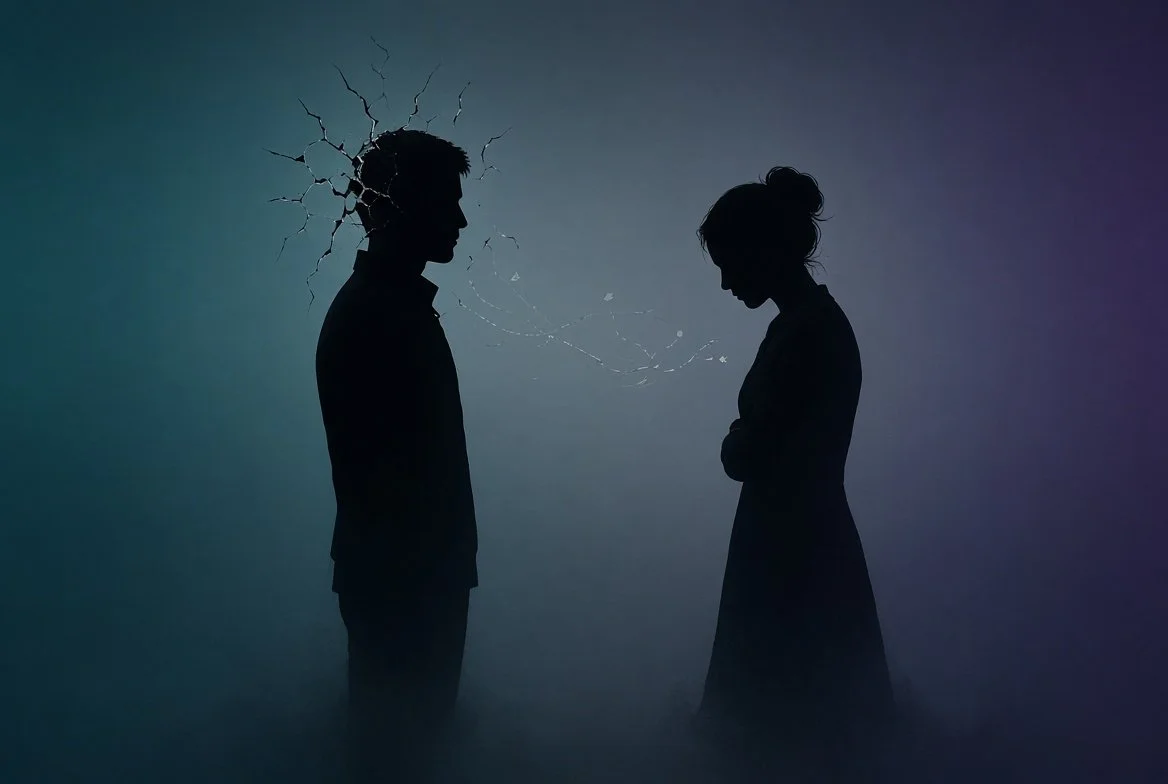
Not because I don’t love her. Not because I don’t wish her every happiness. But because she has cut me out of her life completely. No calls. No texts. Years of her not wanting to share in anything real together. She has decided that any real conversation with me is too overwhelming for her mental health, and that I am the problem.
Rebooting Your Brain
The Computer Crash Analogy: Rebooting Your Brain After TBI
Your brain used to run like a lightning-fast, high-end laptop.
Tabs flew open without hesitation. Multitasking felt effortless. Memories loaded instantly. Thoughts moved quickly and clearly. You could juggle work, conversations, plans, and emotions all at once without breaking a sweat.
Then the TBI hit — like a massive power surge during a violent storm.
Suddenly everything changed.
Programs started lagging. The screen froze with thick brain fog. Saved files (your memories) became corrupt or hard to find, impossible to save new ones on demand. Simple tasks that once took seconds now crashed the entire system, leaving you exhausted and staring blankly at the wall, wondering why your own mind felt like a stranger.
Repair Over Exile
Why Cutting Out a Sibling Is Almost Always the Wrong Choice
There’s a quiet epidemic happening in many families today: siblings cutting off siblings, family cutting off family. What often starts as “I just need some space” can slowly harden into permanent estrangement. While the person asking for distance may believe they’re protecting their peace, the reality is far more painful — for both sides.
Silent Sister Wound
When Your Sister Rejects Your Friendship After Your TBI
After three years of silence and rejection following my traumatic brain injury, my sister recently told me she doesn’t have the emotional capacity for anything beyond “simple” conversations or staying strictly in “the present.”
Beauty in the Broken Days
Some people come into your life (even after they’ve left it) and quietly rearrange how you see everything. For me, one of those people is Claire Wineland.
Claire lived with cystic fibrosis—a serious, progressive lung and digestive disease—from birth. She spent huge chunks of her short life in hospitals, hooked up to machines, fighting infections, and facing the very real possibility that each day might be one of her last. She died at 21 in 2018, just days after a double lung transplant. Yet she left behind a voice that still echoes powerfully: sick people are not broken. They are not to be pitied. And their lives can be incredibly full, meaningful, and even beautiful—because of the pain, not in spite of it.
Pounding Headache, Fading Words
I sat down today with the best of intentions. Laptop open, a glass of lemonade, notes scattered across the table like I actually had a plan. The goal? Write a blog post about life with traumatic brain injury (TBI) recovery. Something honest, maybe a little hopeful, definitely real.
Instead, I got... this.
About fifteen minutes in, the familiar pressure started building behind my eyes. Not the dramatic Hollywood migraine with flashing lights and vomiting—just a slow, stubborn fog that turns simple thoughts into tangled knots. I’d type a sentence, then stare at it wondering if it even made sense. Delete. Rewrite. Delete again. The words that felt clear in my head came out jumbled on the screen, like someone had rearranged the letters while I wasn’t looking.
This is TBI recovery in a nutshell for me right now: the intention is there, the effort is there, but the brain hardware is still rebooting. And when a headache joins the party, even basic thoughts get confusing.
Estrangement Meets Mercy
Divine Mercy Sunday: Finding Forgiveness and Healing in Family Estrangement – Lessons from St. Faustina’s Diary
Every year, the Sunday after Easter brings us Divine Mercy Sunday—a feast day given to the Church through the visions and writings of St. Maria Faustina Kowalska. It’s not just another holy day on the calendar. It’s a profound invitation from Jesus Himself to plunge into the depths of God’s Mercy, especially when life feels shattered by pain, rejection, or loss. For me, this feast hits especially close to home because of a wound that still aches: my sisters cutting me out of their lives after my brain injury, right in the middle of their teenage rebellion.
A Dark Room
Finding Light in the Dark Room: What the Documentary “A Dark Room” Revealed About My Own TBI Recovery
Three years after my traumatic brain injury, I watched the 2016 documentary A Dark Room and felt like someone had finally filmed the inside of my head.
The film follows Max Taylor, a promising young hockey player whose NHL dreams ended when he suffered concussions back-to-back. Afterward, Max spent months literally locked away in a dark room—curtains drawn, lights off, noise intolerable, head pounding, emotions spiraling. He felt isolated, angry at the system that failed him yet still in love with the sport that in some ways made him who he was, and at times was suicidal. The documentary doesn’t sugar-coat it: the “dark room” wasn’t just a recovery recommendation—it became a prison of sensory overload, identity loss, and slow, uncertain healing. Through interviews with other players, doctors, and families, the film exposes hockey’s tough-it-out culture while showing the very real, very human cost of repeated concussions.
Where’s Tommy?
I just finished reading Where's Tommy?: A mother’s journey through her son’s traumatic brain injury by Debbie Lennon – It was a heart-wrenching look at the invisible hell of undiagnosed TBI.
If you've ever wondered why someone’s life can spiral so dramatically after what seems like a “minor” accident, Debbie Lennon’s new memoir Where’s Tommy?: A Mother’s Journey Through Her Son’s Traumatic Brain Injury is required reading.
At 16, Tommy Lennon suffered a surfing accident — a surfboard to the forehead that left him with stitches and what everyone assumed was just a bump on the head. No dramatic coma. No obvious red flags at the ER. Life went on. But there was nothing “minor” about it.
Rising Again
Accepting a New Life After Traumatic Brain Injury
This Easter season, as we celebrate the Resurrection, I’ve been reflecting on what it really means to be made new. For those of us living with a traumatic brain injury (TBI), the idea of “new life” isn’t just a beautiful metaphor—it’s our daily reality. And it rarely feels beautiful. But getting here to new life? It meant walking through a kind of death first.
When Jesus invited us to “die to self” so that we could truly live, I don’t think He was speaking in abstract theology. He was describing a painful, necessary surrender. The old version of me had to die so this new version could rise. And let me be honest: accepting that death has been one of the hardest parts of my recovery.
Before my injury, I pictured a future filled with family. Close family. Friendly, meaningful talks, inside jokes, shared holidays, and the kind of closeness that feels unbreakable. We were going to grow old together, raising our kids side by side, leaning on each other through every season of life.
Brain injury changed that script.
Brain on a Cross
Forgiving While the Nails Are Still in:
What Jesus on the Cross Teaches TBI Survivors About Grace in the Middle of Ongoing Hurt
“Father, forgive them, for they know not what they do.”
Those words still stop me cold.
Not “Father, forgive them after they’ve apologized.” Not “Father, forgive them once the pain stops.” Jesus spoke them while the hammer was still ringing, while the blood was still flowing, while the very people who put Him there were mocking Him from the foot of the cross. He offered full forgiveness in the middle of active, ongoing harm.
For those of us living with traumatic brain injury — and for the families who love us — this is not some distant theology. It’s a survival skill we’re forced to learn over and over again during recovery. For those of us with memory issues as a significant symptom struggle each day, the forced learning to forgive and apply this forgiveness cuts deeper.
Silent Birthdays
The Ache of Loving a Sister You Can’t Reach
Today is her birthday again.
I know the exact date without looking at a calendar. Some things just etch themselves into you. I wake up, go to pray for her, and there it is—another year where the words “Happy Birthday” sit heavy in my chest like stones I’m not allowed to throw. I type them out in my notes app sometimes. Delete them. Type them again. Then close the app and go make lemonade, because reaching out isn’t an option anymore and all I have left are these lemons. She asked me to leave her alone. And I’m trying—God, I’m trying—to respect that.
It wasn’t always this way. I used to communicate with her every day and she would communicate back with me each day. For years we were close as a brother and sister. We used to see each other often. Enjoy doing fun activities. I’d wish her not only happy birthday but wish her happy feast days, baptismal days, confirmation anniversary days - days she didn’t even know were happening that day until I’d wish it to her. It didn’t used to be silent.
But then came the end of her high school years and the first stretch of college.
Newborn Tears
Lately, as my recovery inches along, I've noticed that although I often feel like a toddler, the toddler feelings at times feel... even earlier. Some days, it's less like being a feisty two-year-old and more like being a newborn all over again. That raw, brand-new-to-the-world stage where everything is basic, overwhelming, and completely dependent on the gentle people around you. It's humbling. It's exhausting. And weirdly, it's also kind of beautiful when I let myself see it that way.
Those Wide-Eyed, Wondering Stares
Newborns stare at faces, lights, shadows—with those huge, unblinking eyes—like they're downloading the entire universe one pixel at a time. No judgment, no rush, just pure taking-it-in.
Some recovery moments feel like that too. I'll catch myself staring at a wall, a window, my own hand, because my brain is slowly, slowly making sense of the world again. It's not blankness—it's deep processing. Curiosity mixed with caution. "What is this place? What am I in? What is going on?"
I try not to fight it. I let myself stare, let the brain do its newborn work of mapping reality one tiny piece at a time. Those staring sessions often lead to small breakthroughs later.
I Don’t Need a Nap!
Hey friends,
I’ve been thinking more about this whole “recovery feels like being a toddler” thing, and there’s one part that keeps hitting me harder lately: emotions. Toddlers don’t just have feelings—they have huge, unstoppable, all-over-the-body feelings that come with zero filter and very few words to match. And honestly? That’s exactly where my brain is right now too.
Those Giant, Wordless Emotions
One minute everything’s okay, and the next a wave crashes in—frustration, sadness, being overwhelmed, or even sudden joy—and it’s so intense I can barely breathe through it. My chest tightens, my face gets hot, tears might show up uninvited, or I just feel like I need to move or hide or yell but nothing comes out right. It’s like my brain is back in toddler mode: the emotion center is fully online and screaming, but the “let’s put this into calm sentences” part is still napping in the corner.
I catch myself doing classic toddler things without meaning to: crossing my arms tight, huffing, pacing in little circles, or just staring at the floor because saying “I’m upset” feels impossible. Sometimes the only thing that escapes is a shaky “I don’t know” or “It’s too much.” And that’s okay. It really is. Just like a toddler isn’t “bad” for melting down—they’re just overloaded—I’m not “bad”, my brain is failing at processing when the feelings get too big. It’s still wiring itself back together.
Stacking Blocks
Why My Brain Injury Recovery Feels Like Being a Toddler Again
If you’ve ever peeked into the world of brain injury recovery, you know it’s a wild, unpredictable ride. I’m still in the middle of mine, and lately I’ve realized something that makes me smile (and sometimes tear up): it feels exactly like being a toddler all over again. Not in a cute, “aww, look at the baby steps” way—though there are plenty of those in recovery sure—but in the raw, confusing, “what just happened?” kind of way. Let me walk you through it, because if you’re recovering too, or love someone who is, maybe this little comparison will help you feel a little less alone… and a little more hopeful.
The Sudden “Where Am I?” Moments
You know how toddlers sometimes wake up from a nap and have no idea how they got there? Raising five kids, I’ve seen this often in their toddler years. One minute they’re in the car, the next they’re in their crib at home, blinking in total bewilderment. They wake up from their nap and confusion is on their face as they look around at the bustle around them in this new room that is different than the quiet carseat they fell asleep in. That’s my life now with memory gaps.
I’m Not Normal
Three years. That’s how long it’s been since I felt like the version of myself that other people used to know.
A traumatic brain injury didn’t just knock me out physically—it rewired how I think, how I speak, how I show up in relationships, and even how I see myself. For a long time I described it the only way that felt honest: I have a broken brain. Some days I still feel like a toddler trapped in an adult body—full of big emotions, zero filter, and the constant fear that I’m never going to be “normal” enough for the people I love.
But here’s what I’ve learned in three years of messy, imperfect recovery: “normal” was never the goal. The goal was honest. The goal was trying. And the goal was slowly becoming someone I could look in the mirror and say, “You’re doing your best, and that’s enough today.” The goal wasn’t to be loved, but to love.
I’m Still Me, I’m Just Under Construction
I read her message three times before it really sank in:
“I honestly don’t know. Because on one hand stopping contact is never easy. But on the other hand continuing contact is so incredibly mentally exhausting for me because it’s such a cycle and it’s not manageable.”
Those words hit like a slow-motion car crash I couldn’t look away from. Not because they were cruel—they weren’t—but because I recognized the cycle she was describing. I helped create it. And right now, in the middle of my own TBI recovery years later, I’m finally learning why it kept happening even though there was nothing I could have done better then, and maybe still can’t now.
A traumatic brain injury doesn’t just scramble your memory or your balance. It rewires the way you feel, speak, and connect. As I learn more about these injuries I believe my frontal lobe took the hardest hit. The part that used to filter impulses, read social cues, and regulate emotions? Suddenly it was offline. What used to be a smooth conversation became a minefield of misfires: oversharing, under-reacting, emotional whiplash, forgetting what I said five minutes ago. I would reach out when I felt the weight of her abandonment of our friendship, be unable to contribute to help her when the overstimulation got too loud, then reach out again because the silence felt like drowning.
She felt every loop.