

Newborn Tears
Lately, as my recovery inches along, I've noticed that although I often feel like a toddler, the toddler feelings at times feel... even earlier. Some days, it's less like being a feisty two-year-old and more like being a newborn all over again. That raw, brand-new-to-the-world stage where everything is basic, overwhelming, and completely dependent on the gentle people around you. It's humbling. It's exhausting. And weirdly, it's also kind of beautiful when I let myself see it that way.
Those Wide-Eyed, Wondering Stares
Newborns stare at faces, lights, shadows—with those huge, unblinking eyes—like they're downloading the entire universe one pixel at a time. No judgment, no rush, just pure taking-it-in.
Some recovery moments feel like that too. I'll catch myself staring at a wall, a window, my own hand, because my brain is slowly, slowly making sense of the world again. It's not blankness—it's deep processing. Curiosity mixed with caution. "What is this place? What am I in? What is going on?"
I try not to fight it. I let myself stare, let the brain do its newborn work of mapping reality one tiny piece at a time. Those staring sessions often lead to small breakthroughs later.
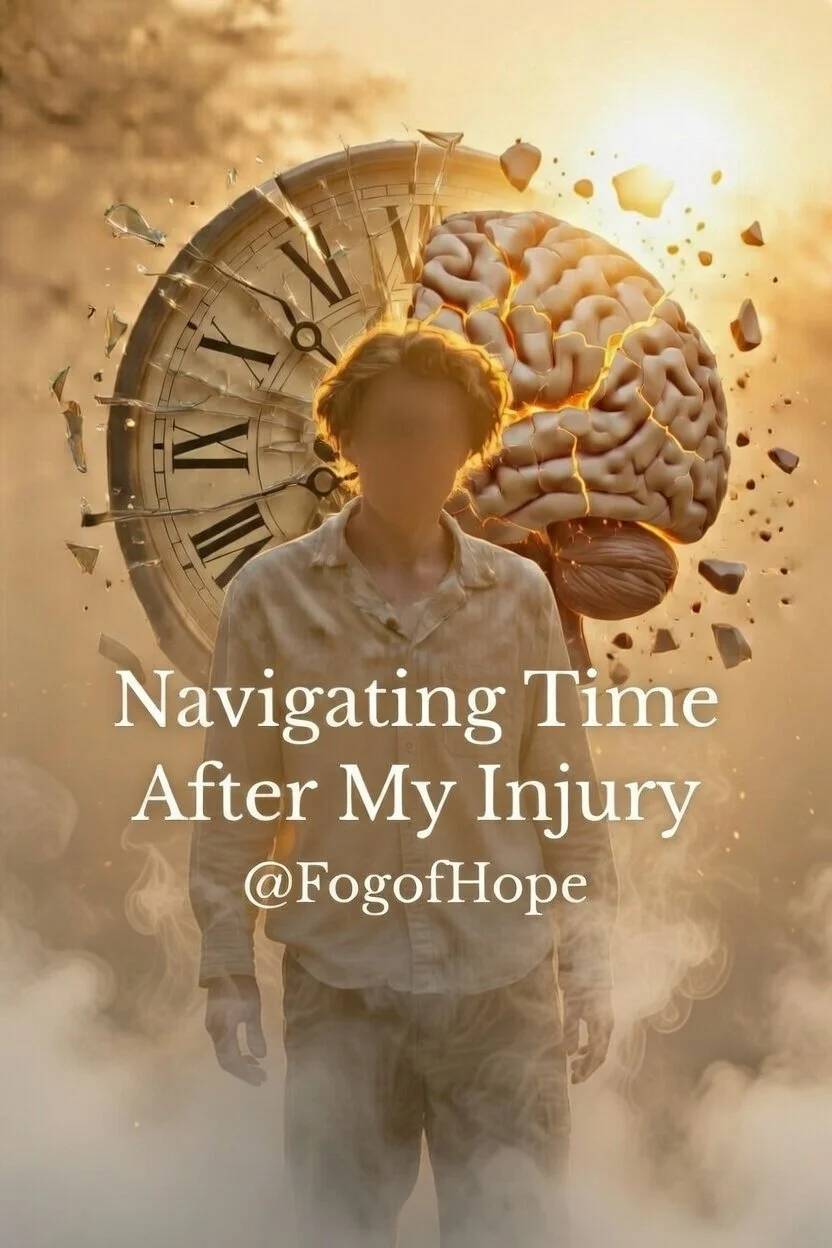
Navigating Time After My Injury
Have you ever felt like time was slipping away, or that minutes stretched into hours during a mundane task? For most people, these are fleeting experiences. I remember when that used to be the case. But for those recovering from a traumatic brain injury (TBI), such distortions in time perception can become a daily reality, intertwined with memory challenges that make even simple routines feel overwhelming.
Today is Daylight Savings Time where we artificially adjust time. An “hour” of time just elapsed in less than a second. While not the same as these experiences of time within brain injury recovery, the reality experienced is often quite similar. How is it now an hour later without feeling like any time has passed and no idea how I got here in this new room or what I am doing? Weren’t we just eating? Imagine Daylight Savings Time adjustments occurring all of the time and unpredictably without warning. For caregivers repeating the same conversation with the patient, like the “Fall Back” hour, wasn’t it already this time of day??! This conversation again?!
For me, pondering the difficulties experienced from this phenomenon leads to the question of why this is happening? Why can’t I just experience time like normal again?