
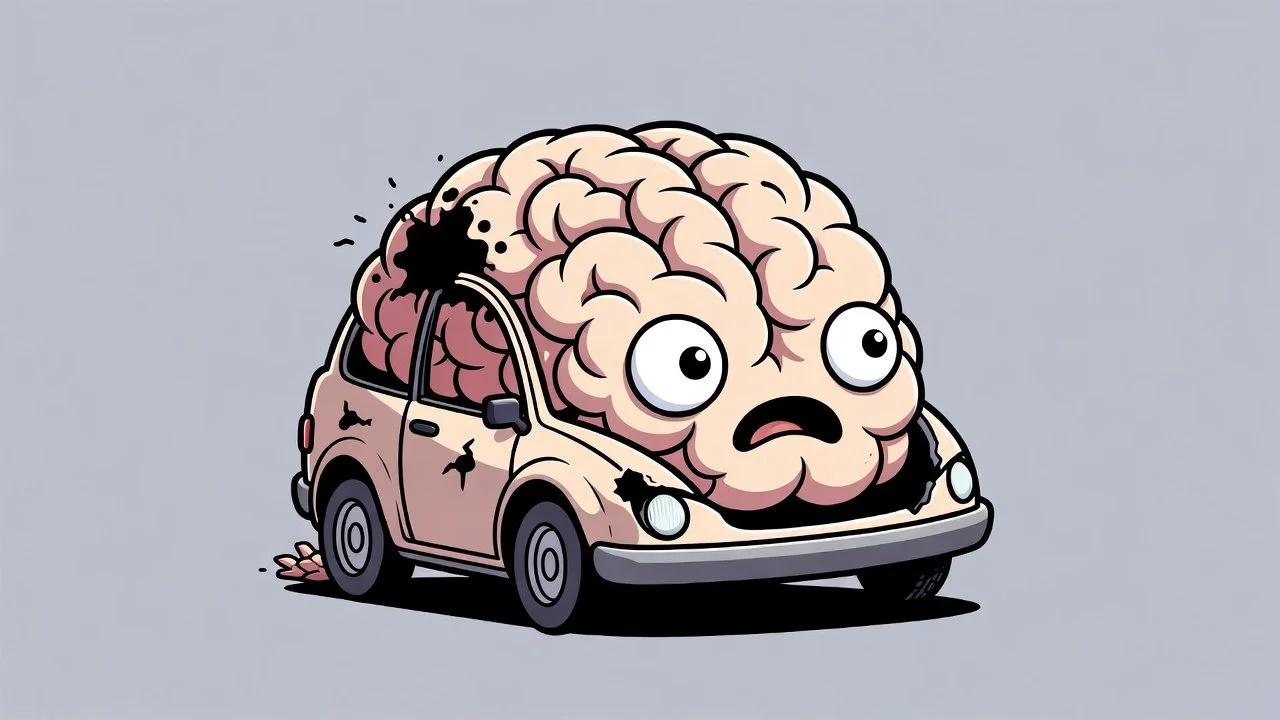
Taking My Brain for a Test Drive
Understanding Brain Symptoms: Like Test Driving a Damaged Car
As we shop for replacement vehicles for our vehicle with a faulty transmission, I can’t help but continue to think about the similarities between car problems and the issues I have experienced with brain injury recovery. Imagine you’ve just been handed the keys to a car that looks perfectly normal from the outside. It’s the same make and model you’ve driven for years. You slide into the driver’s seat, turn the key, and… something’s off. The engine starts, but it doesn’t purr like it used to. The steering feels loose in some spots and overly tight in others. The brakes work, but they hesitate for half a second too long. The radio keeps cutting out. Every little system that used to work seamlessly now has quirks, and you can’t quite explain why to the mechanic. The mechanic might even try convincing you nothing is wrong. But the test drive experience shows there are things wrong - sometimes obvious - sometimes hard to explain.
That’s what living with a Traumatic Brain Injury (TBI) often feels like.

My Transmission is Shot
When Your Transmission Goes Out: What Car Trouble Taught Me About Living with a Brain Injury
We had a vehicle with a transmission starting to fail. The vehicle would act strange. The engine was revving, but the power wasn’t reaching the wheels the way it should. Shifting felt delayed and clunky. We made it home, but the warning lights came on, and we knew something was seriously wrong with the transmission.
After a painful diagnostic visit, the mechanic confirmed it: transmission is failing. Not a cheap or simple fix. The part that transfers power from the engine to the drivetrain was damaged, and without it, the vehicle couldn’t do what it was built for—even though the engine itself was still running strong. Sound familiar?
That moment hit me hard because it mirrored exactly what happened to my brain three years ago after my traumatic brain injury (TBI).

Rebooting Your Brain
The Computer Crash Analogy: Rebooting Your Brain After TBI
Your brain used to run like a lightning-fast, high-end laptop.
Tabs flew open without hesitation. Multitasking felt effortless. Memories loaded instantly. Thoughts moved quickly and clearly. You could juggle work, conversations, plans, and emotions all at once without breaking a sweat.
Then the TBI hit — like a massive power surge during a violent storm.
Suddenly everything changed.
Programs started lagging. The screen froze with thick brain fog. Saved files (your memories) became corrupt or hard to find, impossible to save new ones on demand. Simple tasks that once took seconds now crashed the entire system, leaving you exhausted and staring blankly at the wall, wondering why your own mind felt like a stranger.