Rebooting Your Brain
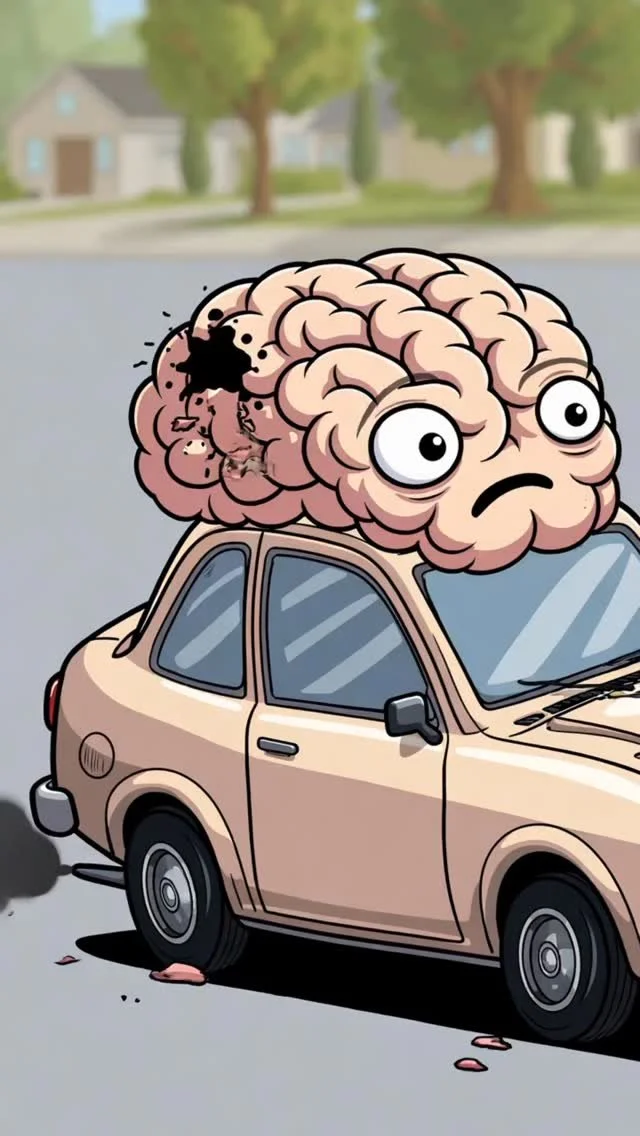
The Computer Crash Analogy: Rebooting Your Brain After TBI
Your brain used to run like a lightning-fast, high-end laptop.
Tabs flew open without hesitation. Multitasking felt effortless. Memories loaded instantly. Thoughts moved quickly and clearly. You could juggle work, conversations, plans, and emotions all at once without breaking a sweat.
Then the TBI hit — like a massive power surge during a violent storm.
Suddenly everything changed.
Programs started lagging. The screen froze with thick brain fog. Saved files (your memories) became corrupt or hard to find, impossible to save new ones on demand. Simple tasks that once took seconds now crashed the entire system, leaving you exhausted and staring blankly at the wall, wondering why your own mind felt like a stranger.
This is what living with post-concussion syndrome or TBI often feels like: your brain is still the same hardware, but the operating system has been badly disrupted.
Recovery isn’t about getting a brand-new brain. It’s a long, patient troubleshooting process. Unfortunately, like sitting waiting for a computer to reboot - patience is not always on our side.
Rest becomes your reboot button. Therapy and rehabilitation are the critical software updates. New tools and strategies (phone reminders, written lists, single-tasking, noise-canceling headphones) turn into essential workarounds.
And the most beautiful part? Neuroplasticity — your brain’s built-in ability to rewire itself — is like having an advanced recovery feature most machines don’t possess. Old pathways can reroute. New, stronger connections can form. The system doesn’t just recover; with time and consistent effort, it can adapt and even improve in surprising ways.
Practical Tips for Rebooting Your Brain
Close unnecessary tabs: Limit multitasking. Use noise-canceling headphones or quiet environments to reduce background “processes” running in the background.
Schedule daily maintenance reboots: Build in short 10-minute breaks every hour. Your brain needs these resets more than it used to. Add in more breaks as you need them.
Track progress like a system log: Keep a simple daily note of what worked and what didn’t. Small wins add up and help you see improvement over time. Being able to look back is not only encouraging, but helpful for further diagnositics!
Run one window at a time: Focus on single-tasking. Many survivors discover that trying to do multiple things at once is what causes the worst crashes.
One woman I know compared answering emails after her TBI to trying to run ten heavy apps at once. After she adopted the “one window open” rule — handling just one email at a time with full focus — her daily output actually doubled without the usual mental crash.
You’re Not Broken — You’re Upgrading
If you’re living with TBI or post-concussion symptoms, please hear this clearly:
You are not broken hardware. You are simply running on upgraded, more mindful software now.
It’s slower in some ways. It requires more intentional care. But it can also become deeper, more present, and surprisingly resilient.
Keep updating the system. Keep giving it rest, patience, and the right tools. Keep trusting the slow but real progress that neuroplasticity makes possible.
Month by month, the crashes become less frequent. The lag times shorten. And one day you realize you’re no longer just surviving — you’re learning to thrive with a brain that has been rewritten by both injury and healing.
You’ve got this. Even when the screen freezes. Even when it feels like nothing is loading. The reboot is happening — one patient day at a time.