Taking My Brain for a Test Drive
Understanding Brain Symptoms: Like Test Driving a Damaged Car
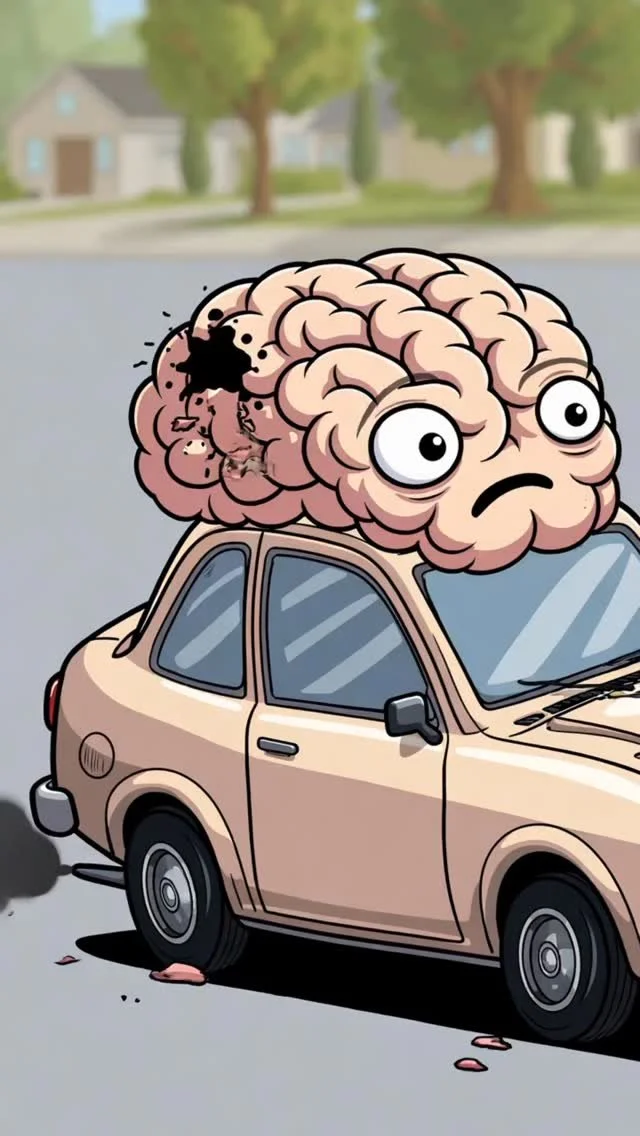
As we shop for replacement vehicles for our vehicle with a faulty transmission, I can’t help but continue to think about the similarities between car problems and the issues I have experienced with brain injury recovery. Imagine you’ve just been handed the keys to a car that looks perfectly normal from the outside. It’s the same make and model you’ve driven for years. You slide into the driver’s seat, turn the key, and… something’s off. The engine starts, but it doesn’t purr like it used to. The steering feels loose in some spots and overly tight in others. The brakes work, but they hesitate for half a second too long. The radio keeps cutting out. Every little system that used to work seamlessly now has quirks, and you can’t quite explain why to the mechanic. The mechanic might even try convincing you nothing is wrong. But the test drive experience shows there are things wrong - sometimes obvious - sometimes hard to explain.
That’s what living with a Traumatic Brain Injury (TBI) often feels like.
Your brain is the most complex vehicle you’ll ever operate. A brain injury—whether from a car accident, fall, sports impact, or blast—doesn’t always leave visible dents on the outside. But inside, the wiring, fluid systems, and control modules have been jostled, stretched, or bruised. The symptoms that follow are your brain’s version of “check engine” lights, strange noises, and unpredictable handling.
Here’s how common TBI symptoms show up during the daily “test drive” of life:
1. Headaches & Pressure – The Engine Knocking
You turn onto the highway and suddenly hear a rhythmic knocking under the hood. It gets louder with speed or when you climb hills. In a TBI brain, headaches often feel exactly like this—pounding, pressure-filled, or migraine-like. They can be triggered by bright lights (high beams), noise (loud exhaust), or mental effort (trying to merge in heavy traffic). What used to be a smooth ride now comes with constant, exhausting engine strain.
2. Dizziness & Balance Issues – Loose Steering & Wobbly Suspension
You go around a gentle curve and the car drifts or feels like the wheels are floating. Simple tasks like walking across a room or turning your head can trigger vertigo or a sensation that the ground is moving. You stand still, close your eyes, and yet even knowing you are standing still the world still spins out of your control. Your brain’s vestibular system—the delicate balance sensors in your inner ear and their connections—has been disrupted. The car still moves forward, but the handling is unreliable, making you hesitant to go anywhere.
3. Memory & Concentration Problems – Faulty Navigation & Dashboard Glitches
You know the route home, but the GPS keeps recalculating for no reason. You put your phone down and can’t remember where. You read a paragraph three times and still can’t retain it. TBI often scrambles short-term memory, working memory, and attention systems. It’s as if the car’s computer randomly clears your saved destinations, dims the instrument panel, or makes the speedometer lag. You’re driving, but you’re not entirely sure how fast or where you’re going, or where you’ve been.
4. Fatigue & Brain Fog – Running on Low Fuel with a Clogged Filter
Even after a full night’s sleep, you feel like you’ve been driving for 12 hours straight on a half tank. Everything takes more effort. The car idles rough when stopped, and acceleration is sluggish. Mental or physical activity that used to be effortless now drains the battery fast. Many people with TBI describe this as “hitting a wall” by mid-afternoon (if you’re lucky enough to make it that far)—your brain is working overtime just to keep the basic systems online.
5. Mood Changes & Irritability – Temperamental Electrical System
One moment the car’s climate control is blowing hot, the next cold. You used to be patient in traffic; now every minor delay sets you off. TBI frequently disrupts the brain’s emotional regulation centers (especially the frontal lobes). The same person can feel euphoric, deeply sad, anxious, or explosively angry with little warning. It’s not “just mood swings”—it’s a damaged control module sending erratic signals.
6. Sensory Sensitivities – Overloaded Sensors & Blown Speakers
The car’s horn is suddenly deafening. Headlights from oncoming traffic feel blinding. Tags in your shirt or certain textures become unbearable. After TBI, the brain’s ability to filter sensory input is often impaired. Everyday sounds, lights, and sensations hit at full volume, like driving with the volume maxed out and all the warning buzzers going off at once.
7. Sleep Disturbances – Faulty Ignition & Erratic Timing
Some nights the car won’t start easily. Other nights it idles high and refuses to shut off. TBI commonly causes insomnia, hypersomnia, or sleep that doesn’t feel restorative. You may fall asleep but wake up feeling like you never left the driver’s seat.
The Most Important Part of the Analogy
When you test drive a damaged car, you don’t just “push through” and hope the problems fix themselves. You take it to a specialist. You get a proper diagnosis. You allow time for repairs. You accept that some issues may need ongoing management—new parts, regular tune-ups, or learning to drive differently.
The same applies to TBI.
Recovery is possible, but recovery doesn’t mean returning to the old previous life like a broken bone or surgery recovery. It means being able to adapt to this new life and somehow still thrive in new ways despite ongoing challenges. Improving symptoms, even if not eliminating them. Many people can see significant improvement in the first 3–12 months with rest, rehabilitation, therapy, and proper medical care. Even years later, targeted interventions (vestibular therapy, cognitive rehab, vision therapy, counseling, and lifestyle adjustments) can dramatically improve quality of life. For many, even though improvements continue, the battle wages on for many many years after the injury.
Final Note
If you or someone you love has had a head injury and things just don’t feel right anymore—even if scans look “normal”—trust the test drive. Your brain is telling you something is off. Listen to it. Just like dealerships for vehicles, shop around until you find the supportive health care you deserve in your recovery.
Talk to a neurologist or concussion/TBI specialist. Seek multidisciplinary care. And most importantly, be kind to yourself or your loved one. You’re not driving a lemon. You’re driving a high-performance machine that took a serious hit and is doing its best to get back on the road.
You’re not alone on this road.
Disclaimer: This post is for informational purposes only and is not a substitute for professional medical advice. Always consult qualified healthcare providers for diagnosis and treatment.