

Love’s Closed Door
After fourteen years of knowing each other, my sister has made her position unmistakably clear: she does not want me to know her, she has no desire to know me, and she wants me out of her life. She has reinforced this boundary repeatedly. By contrast, in just one year she went from meeting a stranger to agreeing to marry him. Yet after everything we shared over those fourteen years, she continues to insist that I leave her alone. Still, she speaks of wanting a picture-perfect wedding day surrounded by a “loving family.” Yet by her repeated choice to cut us out of her life, she actively prevents and makes impossible the very love and communion she says she desires.
Presence Over Distance
Yesterday, I sat across from old friends I hadn’t seen in years. What could have been a simple catch-up turned into something much deeper. In just a short time together, after a distance from both sides for the previous years, they poured out more genuine compassion, care, concern, prayers, and love than I’ve felt even from family in a very long time.

What is Your Name?
Last night, my wife showed me a video that came up in her feed of Vice President JD Vance appearing on The View. Politics aside, I was impressed by a few things. Despite everyone fighting to get their words in and constantly interrupting each other, he remained remarkably patient and truly listened to the others. It reminded me how, with a brain injury, the chaos of overlapping voices and group conversations often makes it hard for me to participate fully. I still try — mostly by listening — but it would be a gift if our culture shifted toward more mutual respect instead of constant interruption. Everyone deserves a chance to be heard, not just the loudest.
Our Children’s Grief
Three years. That’s how long this injury has reshaped not just my life, but the lives of our children in ways I never imagined and still struggle to accept. They watched a brain injury steal their father and their childhood in the course of an evening three years ago that has been unpacked each day since.
I see it in their eyes — the confusion, the sadness, the careful way they now navigate interactions with me. The dad they once had — the one who remembered every promise, played endless games, carried them on his shoulders, and led with steady confidence — has been replaced by someone who can’t remember what we did yesterday or how to do the most basic things of cooking or simply listening at times for them.
Manure, Sweat, and Surrender
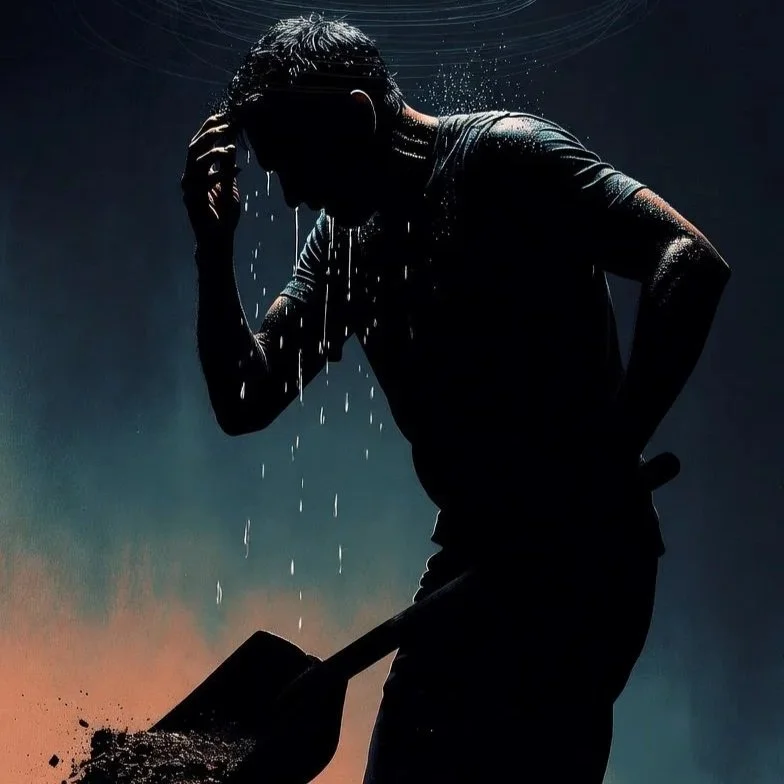
Today I stepped outside with every intention of being useful. Just a simple chore—shoveling manure on our small farm. Something I used to be able to do for hours without thinking twice. Five minutes. That’s all it took today.
My arms burned. My legs turned to lead. The world started spinning. A pounding headache slammed into my skull. Sweat poured down my forehead, stinging my eyes, dripping off my face, soaking my shirt until it clung to my back like a second skin. And it was only 75 degrees outside. Not even hot by most standards.
I had to stop. Had to sit down, head between my knees, waiting for the dizziness to pass. Once again, my body had issued a hard stop I never asked for.

Sternly Misunderstood
Living with a traumatic brain injury (TBI) changes everything. The headaches, the fatigue, the fog that clouds your thinking—these are the visible (or at least documented) struggles. But one of the deepest, most devastating pains often stays hidden: the crushing weight of being misunderstood by the people who matter most.
I never expected that the hardest part of recovery wouldn’t be the physical symptoms, but the way my words now land like grenades in conversations with those I love. What used to flow naturally—explaining my feelings, sharing my thoughts, resolving a disagreement—now feels like navigating a minefield with a map I can barely read.
Hope, Abandoned.
Brain injury recovery strips away many illusions. One of the hardest is the belief that family—especially close family—will always choose you, even when life gets messy and you change in ways no one saw coming. I had clung to the persistent hope that the people who walked away - especially family - might one day come back. That they’ll change their minds, see your progress, and choose reconnection. Today, it’s clear I’ve been avoiding laying that hope to rest for far too long. If anyone else is early in their recovery, and is still holding onto people who have already walked away, learn from my mistake and don't take as long as I have to accept their rejection and finally abandon that false hope of their return.
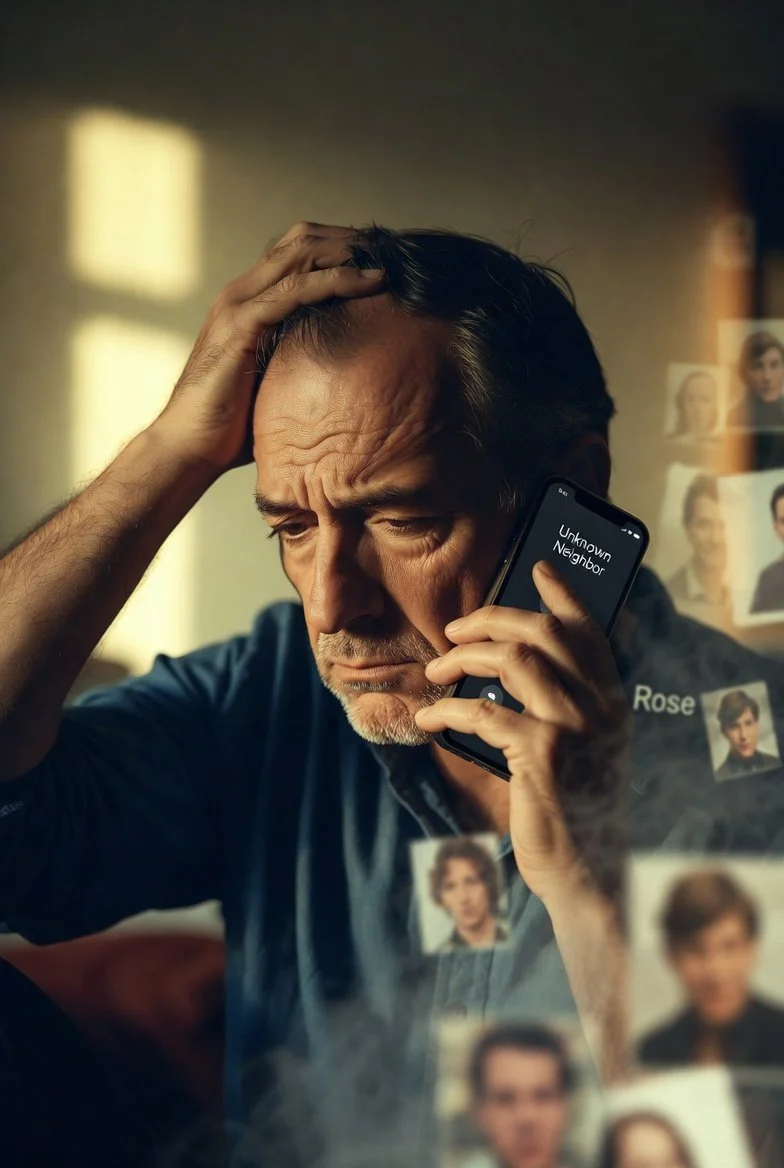
Who Is This?
A few days ago, our phone lit up with a call from a number I didn’t recognize. I answered, as I often do now in recovery—trying to stay connected to a world that sometimes feels half-erased.
“Hi, this is your neighbor Jen,” the voice said warmly. “I’m wondering if you’ve seen Rose lately?”
I froze. Jen? Rose? The names echoed in the empty spaces where memories should be. Was Rose a person? A dog? A neighbor’s kid? My own relative? I had no idea. I also had no clear picture of who this “neighbor” Jen was. Did they move in down the road in the last three years? I don’t have many neighbors change in the country life here but I don’t know a lot now. The street, the faces, the shared history—large chunks of it are simply gone.

Sister’s Silent Engagement
When Your Sister Can’t Handle a Conversation With You – What That Really Says About Her Readiness for Marriage
Today I’m sitting with a truth that hurts more than most of my TBI symptoms combined.
My sister just announced she is engaged and planning her wedding.
And I won’t be there.
Not because I don’t love her. Not because I don’t wish her every happiness. But because she has cut me out of her life completely. No calls. No texts. Years of her not wanting to share in anything real together. She has decided that any real conversation with me is too overwhelming for her mental health, and that I am the problem.

Repair Over Exile
Why Cutting Out a Sibling Is Almost Always the Wrong Choice
There’s a quiet epidemic happening in many families today: siblings cutting off siblings, family cutting off family. What often starts as “I just need some space” can slowly harden into permanent estrangement. While the person asking for distance may believe they’re protecting their peace, the reality is far more painful — for both sides.

Estrangement Meets Mercy
Divine Mercy Sunday: Finding Forgiveness and Healing in Family Estrangement – Lessons from St. Faustina’s Diary
Every year, the Sunday after Easter brings us Divine Mercy Sunday—a feast day given to the Church through the visions and writings of St. Maria Faustina Kowalska. It’s not just another holy day on the calendar. It’s a profound invitation from Jesus Himself to plunge into the depths of God’s Mercy, especially when life feels shattered by pain, rejection, or loss. For me, this feast hits especially close to home because of a wound that still aches: my sisters cutting me out of their lives after my brain injury, right in the middle of their teenage rebellion.

I’m Not Normal
Three years. That’s how long it’s been since I felt like the version of myself that other people used to know.
A traumatic brain injury didn’t just knock me out physically—it rewired how I think, how I speak, how I show up in relationships, and even how I see myself. For a long time I described it the only way that felt honest: I have a broken brain. Some days I still feel like a toddler trapped in an adult body—full of big emotions, zero filter, and the constant fear that I’m never going to be “normal” enough for the people I love.
But here’s what I’ve learned in three years of messy, imperfect recovery: “normal” was never the goal. The goal was honest. The goal was trying. And the goal was slowly becoming someone I could look in the mirror and say, “You’re doing your best, and that’s enough today.” The goal wasn’t to be loved, but to love.