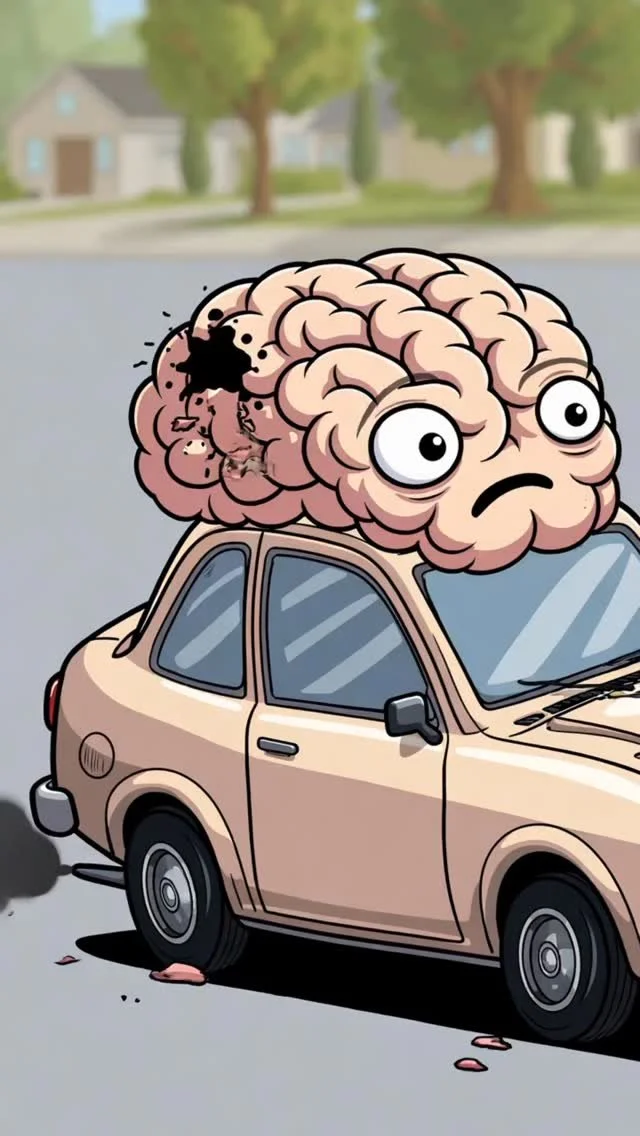
Sister’s Silent Engagement
When Your Sister Can’t Handle a Conversation With You – What That Really Says About Her Readiness for Marriage
Today I’m sitting with a truth that hurts more than most of my TBI symptoms combined.
My sister just announced she is engaged and planning her wedding.
And I won’t be there.
Not because I don’t love her. Not because I don’t wish her every happiness. But because she has cut me out of her life completely. No calls. No texts. Years of her not wanting to share in anything real together. She has decided that any real conversation with me is too overwhelming for her mental health, and that I am the problem.
This is the same sister I used to text and snap with every single day. For literally over five straight years before, every day we shared memes, vented about work, laughed about old family stories, and checked in like best siblings living next door - mutually sharing real life each day. That daily closeness lasted until she made rebellious choices to cut off family and then my traumatic brain injury changed things. Suddenly, the new version of me — with memory issues, slower processing, fatigue, and raw emotions — became “too much” for her.
Let me be clear: I have owned my part. My injured brain early on reacted to the loss and being cut out with raw, unfiltered emotion. Those reactions were real. They were loud. And I have apologized—repeatedly, sincerely, and with genuine attempts to change. I’ve built systems to manage my emotional volume. I’ve done the therapy, the checklists, the pause-and-reflect habits. I’ve shown up as the steadier, humbler version of myself.
She still chose to cut me out. She still says I am the threat to her peace.
Here’s the part I can’t stop turning over in my foggy brain:
If she cannot handle a single honest conversation with her own brother—someone who has known her for so many years and loved her deeply and provided everything our family could give for her and supported her—how exactly is she ready to stand up in front of family and friends and make a lifelong commitment to marriage?
Marriage is not a low-stakes text thread. Marriage is the ultimate “too much” relationship. It demands you show up on your worst brain-fog days, your most emotionally flooded moments, your exhausted, irritable, triggered evenings. It requires holding space for another person’s pain, their glitches, their healing process, their limitations—even when it feels overwhelming.
If a short conversation with me sends her running for emotional cover, what will happen when real life with her fiancé brings disagreements, stress, financial pressure, or (heaven forbid) his own hard seasons - even perhaps his own TBI someday?
I’m not writing this to shame her. I’m writing it because a basic principle applies here: the quality of your relationships reveals the quality of your ability to enter into a marriage. It reveals a great deal about our readiness for marriage.
A healthy marriage needs some of the exact skills I’ve had to rely on after TBI:
Clear boundaries that still allow connection
Emotional regulation tools instead of shutdown or withdrawal
The humility to say “this is hard for me right now” without making the other person the enemy
The maturity to repair instead of permanently exiling
Forgiveness - even while the other person is still hurting you
Love that is for who the person is, not what the person does
If she isn’t ready to practice those with me—her brother who has already done the hard work of apologizing and changing—then I worry she isn’t truly ready to practice them with the man she’s promising forever to.
And that realization breaks my heart in a whole new way.
I used to imagine being at her wedding, tearing up with pride of who this little sister has become and the great things ahead of her for her life with God and family. I pictured being the big brother who had her back no matter what. Now I picture an empty chair where I should be sitting, and it feels like another concussion all over again.
The grief is heavy. The silence on what should be one of the happiest days of her life is deafening. I’ve tried reaching out gently and respectfully, and yet she confirmed for the last five months now that she wants me to leave her alone and remain out of her life even after having not contacted her for months. Each time the door stayed closed. Each time I was reminded that I am the problem for her mental health. Despite demonstrating to the contrary and providing gifts of time, money, energy to help her and support her, nothing is good enough for her to have me be worthy of a relationship with her. She continues to say she wants me to leave her alone.
So I’m doing what anyone must do when we can’t control the outcome: I’m turning the pain into better systems. I’ve added a new protocol to my personal operating system called “Grieving Without Guilt” that I’ve learned to process this loss each morning when I discover she’s still cut me out of her life completely. It has three steps:
Feel it fully (set a 5-minute timer so it doesn’t swallow the whole day).
Write the unsent letter (then delete it).
Recommit to the people who do choose to stay—my wife, my kids, my own healing.
Because here’s the hopeful part I’m choosing to hold onto: people grow. Brains rewire. Hearts soften. Marriage itself can be one of the greatest teachers—if she lets it. Maybe one day, when life with her husband gets real and she discovers that everyone is “too much” sometimes, she’ll remember her brother was willing to do the work and still loved her despite the painful treatment from her.
Until that day, I will keep healing without apology for needing grace. I will keep showing up as the steadier version of myself that my TBI forced me to become. And I will keep the quiet hope that someday she’ll be ready—not just for marriage, but for the messy, beautiful, overwhelming work of real family love again.
If you’re carrying a similar cut-off story—whether from TBI or any other reason—know this: their inability to handle you does not define your worth. It reveals their current capacity. Your job is to keep building your capacity anyway.
You’ve got this—even if your brain doesn’t. And even if your sister isn’t ready yet.
I’m still here when she is.
With love and systems,
A brainless big brother who still believes in second (and third, and fourth) chances even when others have given up.