Silent Sister Wound
When Your Sister Chooses to Reject Your Friendship After Your TBI
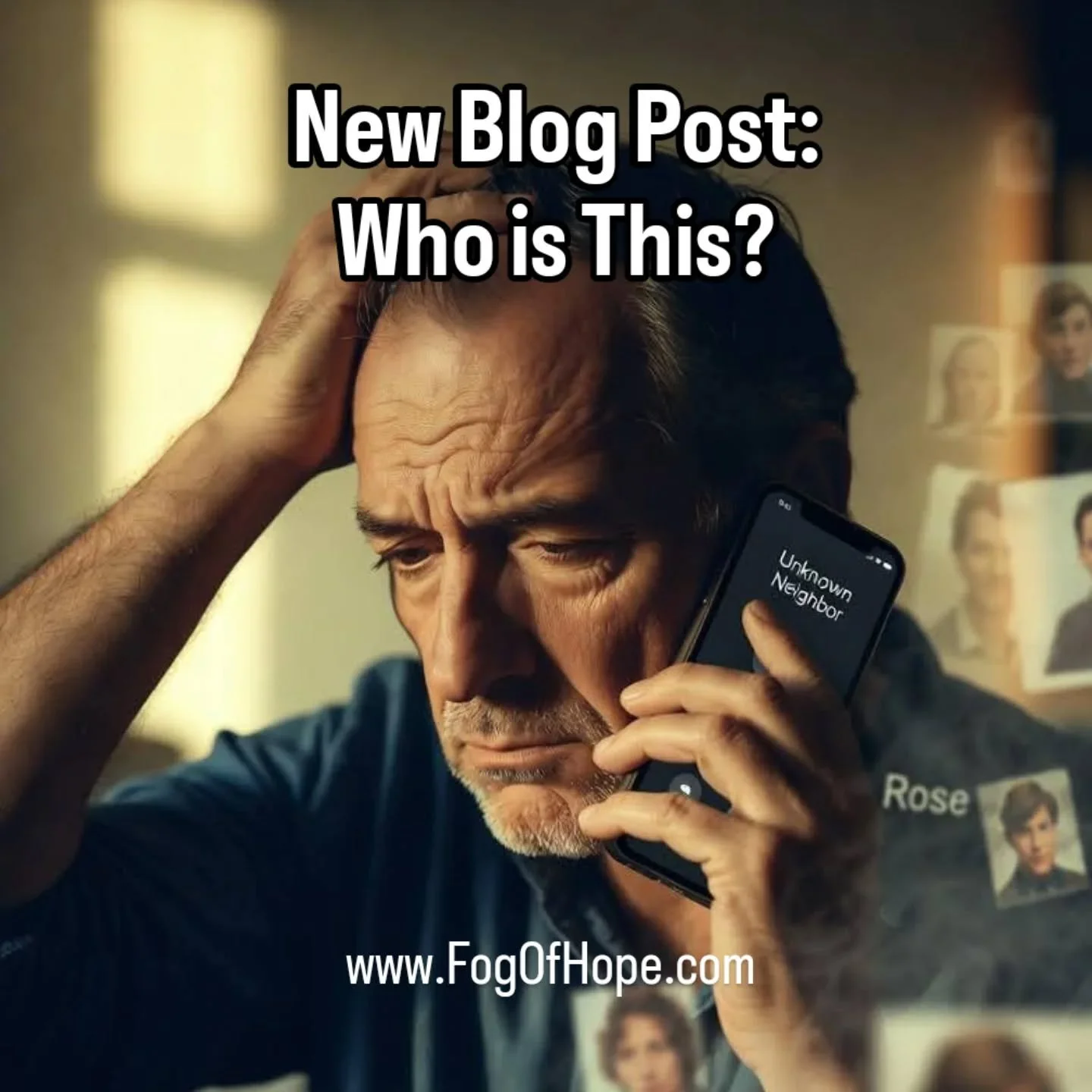
After three years of silence and rejection following my traumatic brain injury, my sister recently told me she doesn’t have the emotional capacity for anything beyond “simple” conversations or staying strictly in “the present.”
I heard her. I respected her boundary. I gently asked for clarification — what “simple” actually meant to her and how a real relationship could function within those limits. I received no response.
What’s difficult for me is that a relationship that must remain permanently “simple” and surface-level is nearly impossible to sustain in any meaningful way. People are complex by nature, and sharing life with someone — especially a sibling — inevitably involves some depth, not just shallow exchanges. If her emotional capacity only allows for that level of connection, then she would struggle to maintain real friendship with anyone, not just me. But that doesn't seem to be the case. She appears as if she has the emotional capacity for many others in her life. This emotional capacity limitation is only directed toward me and not others, which shows demonstrably the limitation is not from an actual lack of emotional capacity but rather from a choice she has made to limit capacity with me. A choice, not a lack of capacity.
I live every day in the present, often with a terrible memory due to the injury. Yet even the present is not an artificial vacuum. It is shaped by the past and oriented toward the future. The world around us doesn’t exist in isolation; our history and hopes are always part of the moment.
Her eventual reply was that she wants no relationship at all and wishes to remove herself from our family. I’m still left wondering what those words truly mean—and what kind of “relationship” she maintains with anyone in her life if it must remain that rigidly limited - defined as only in the present and simple.
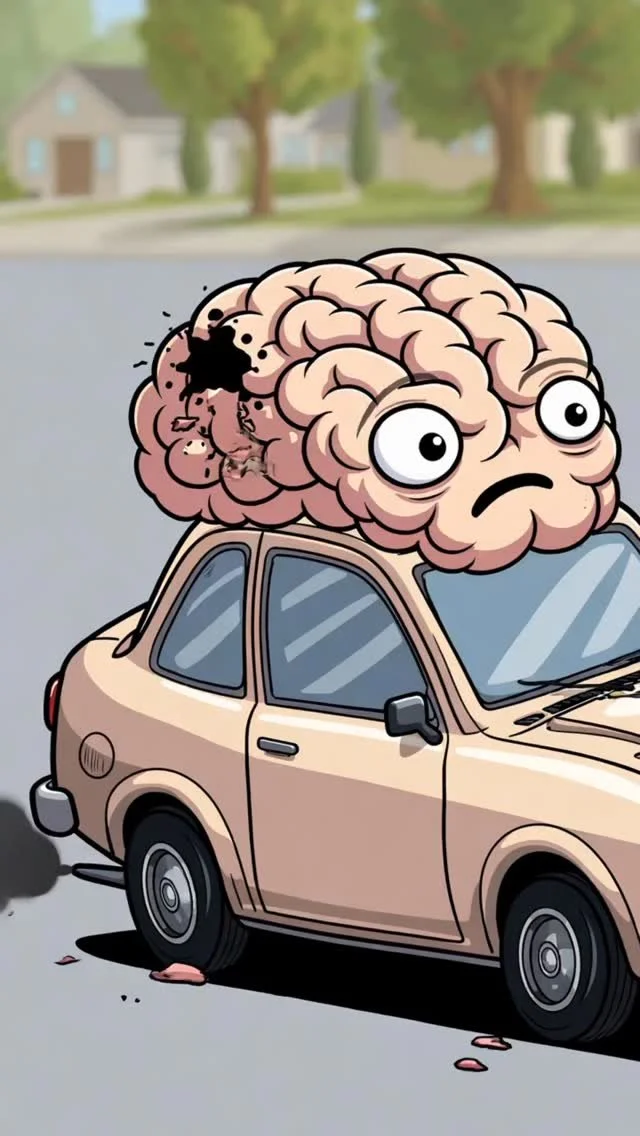
After my traumatic brain injury, many things changed—my memory, my emotions, my energy levels, and the way I connect with people. According to the Model Systems Knowledge Translation Center (MSKTC) factsheet Social Skills After Traumatic Brain Injury, TBI commonly affects social skills in ways that can make interactions feel exhausting for everyone involved. Common challenges include trouble expressing thoughts and feelings clearly, difficulty reading facial expressions or tone of voice, talking too little or too much, losing focus mid-conversation, and struggling to get along with others—especially when strong emotions like anxiety or frustration are present.
Social skills are the tools we use to communicate, read others, manage emotions, and respect boundaries. They matter because they help us maintain old relationships, build new ones, feel confident, and simply enjoy being with people. Sibling relationships, in particular, were never meant to stay “simple.” They are built on shared history, the safety to say “I’m struggling,” the joy of sharing accomplishments, and the freedom to show up as our full selves—even when life gets messy.
Instead, our connection has slowly shrunk until she wants nothing to do with our family anymore. The vagueness of her boundary left me constantly guessing: Is mentioning a doctor’s appointment too much to be simple? Can I share a small victory from my week or is that the past? It didn’t matter, as she reaffirmed instead that she wants nothing with us. However the lack of clarity shows again how I’ve been protecting her from my reality while quietly grieving the sister who once knew me before the injury—and who seems unwilling to know me after it.
I still love my sister. That hasn’t changed. What hurts is the silence around my reality and the undefined boundary that makes me feel like simply existing with a brain injury is too much. Even a simple “How are you?” apparently crossed the line. In her own words, I had “done everything to be a friend,” and it was “up to her” to build the friendship. She said that last year, yet there still has been only silence and no effort from her side and no example of what she has done to proactively or intentionally be a friend in years.
I’m not angry that she has limits — we all need healthy boundaries. But boundaries are not the same as total cutoff. Healthy boundaries focus on specific behaviors or situations you need to protect yourself from, not on rejecting the person themselves. They say, “This is what I can and cannot handle right now,” rather than “You, as a person, are too much for me.” Asking for a relationship to stay permanently “simple” and “just in the present” isn’t a realistic boundary for a real friendship — it’s nearly impossible to maintain any meaningful connection that way, especially with refusing to define or lead by example showing what that would even mean. Real relationships, especially sibling ones, involve some depth, shared history, and complexity. Cutting someone out entirely is not a boundary — it is the death of the relationship.
If you’re the one living with the injury, like me: You’re not crazy for wanting more from your family. For wanting a real relationship just like they have with others in their life. Wanting a sibling relationship that can hold some of the complexity that comes with TBI doesn’t make you demanding—it makes you human. It’s okay to grieve what’s been lost. It’s okay to ask for clarity. And it’s okay to decide what kind of connection you can accept moving forward.
I don’t know how this story ends yet. She has admitted treating me poorly for years. Maybe one day she’ll explain what “simple” really means to her and take the initiative—for the first time in years—to simply be a real friend again. Maybe we’ll find a new, more honest middle ground. Or maybe I’ll have to accept that some relationships cannot stretch the way I hoped.
Perhaps my mistake has been assuming my communication changes after the injury were the main reason the relationship faded. In reality, if I had never gotten hurt, we might still have ended up here—because she has chosen that our family no longer means enough to her to keep. There is not a lack of capacity, there has been a series of choices that she has made.
Some relationship losses after TBI stem directly from the injury. But others, we might have lost anyway, because of the choices the other person has made about who they want to become.
Resource: “Social Skills After Traumatic Brain Injury” factsheet from MSKTC (mskTC.org/tbi/factsheets). Highly recommended for both survivors and their families.