Stacking Blocks
Why My Brain Injury Recovery Feels Like Being a Toddler Again
If you’ve ever peeked into the world of brain injury recovery, you know it’s a wild, unpredictable ride. I’m still in the middle of mine, and lately I’ve realized something that makes me smile (and sometimes tear up): it feels exactly like being a toddler all over again. Not in a cute, “aww, look at the baby steps” way—though there are plenty of those in recovery sure—but in the raw, confusing, “what just happened?” kind of way. Let me walk you through it, because if you’re recovering too, or love someone who is, maybe this little comparison will help you feel a little less alone… and a little more hopeful.
The Sudden “Where Am I?” Moments
You know how toddlers sometimes wake up from a nap and have no idea how they got there? Raising five kids, I’ve seen this often in their toddler years. One minute they’re in the car, the next they’re in their crib at home, blinking in total bewilderment. They wake up from their nap and confusion is on their face as they look around at the bustle around them in this new room that is different than the quiet carseat they fell asleep in. That’s my life now with memory gaps.
I’ll be in the middle of a conversation, or trying to remember what I did yesterday, and suddenly—poof—it’s like someone carried me to a different room while I was sleeping. My brain just… skipped. I know time passed. I know things happened. But the details? Gone. It’s scary. It’s becoming a little less scary every time; more like a gentle “oh, toddler brain strikes again” now that I understand it a little more.
The helpful part? I’ve started treating those gaps the way a parent might treat a confused little one - with patience, love, and understanding. I used to have a gap of years in the first couple years of my recovery with the inability to remember what had happened since my injury. Waking up confused that two years had passed and with no understanding of what I was facing was an insurmountable reality some days. Fortunately, sometimes the gap now is from the last hour or day. To combat this I learned early on the value of journaling. I keep a simple notebook on our counter and desk and a place for notes on my phone. When I “wake up” in a new mental room, I flip back a page or two. No pressure, no frustration—just a soft to myself, “Hey bud, here’s what we did. Here’s what happened you don’t remember.” I would read what I journaled about. It turns the gap of what I’m missing in my memory from a scary hole into a tiny bridge over that hole, even though you’re still scared you will fall off the bridge into it. If you’re recovering, try journaling. One sentence a day can be enough to start. When you do, you’re no longer just failing at remembering; you’re learning how to be gentle with a brain that’s still growing up. Just like a toddler, I still miss things, but at least I can reset somewhere now when I do. Journaling - if you don’t yet, I highly recommend it. Just like a toddler - you don’t have to remember everything from every day to be successful. Most people don’t remember what they did when they were two years old day by day either. It’s ok to not remember. Help yourself function. Try journaling!
When the Feelings Are Huge But the Words Won’t Come
Toddlers feel everything at full volume—joy, frustration, hunger, love—but they don’t have the vocabulary yet. They stomp, they cry, they reach out with grabby hands because “I want that” is all they can manage.
That’s me on the tough days. A wave of emotion crashes over me (sometimes happy, sometimes sad, sometimes just… big), and I stand there opening and closing my mouth like a goldfish. The right words? They’re hiding somewhere in the fog. I can feel them, but they won’t line up.
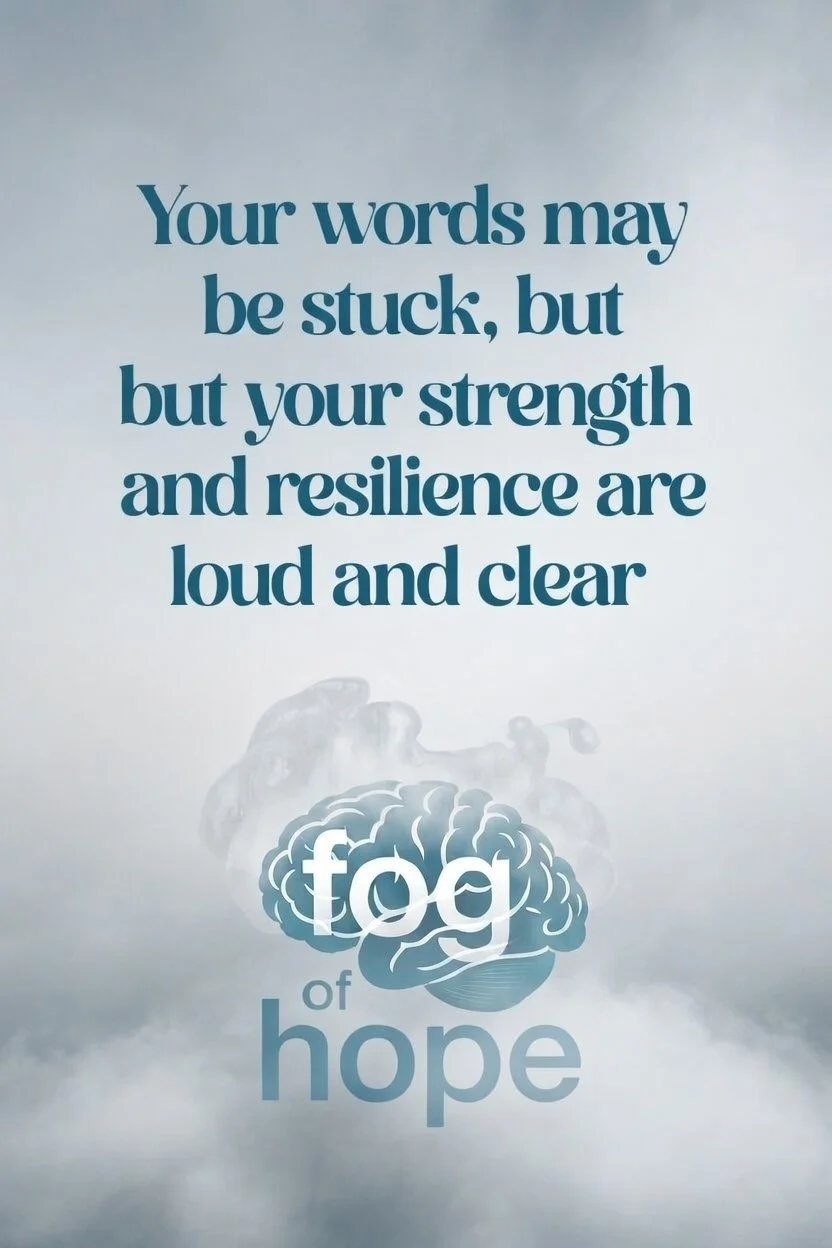
Here’s the part that’s actually kind of sweet: I’ve learned to borrow toddler tools. Instead of forcing perfect sentences, I point, I gesture, I say the simplest thing that fits—“Big feeling right now.” My family with my wife and kids have started doing the same. They don’t rush me; they wait like patient parents, then offer a hug or a guess: “Are you mad? Sad? Excited?” Nine times out of ten, that little bit of help lets the real words tumble out.
If you’re supporting someone in recovery, remember this: silence isn’t rejection. It’s just a toddler brain working overtime. A calm “I’m here” or a quiet hand on the shoulder works wonders. The words are in there, they are just stuck. And for those of us healing—give yourself the same grace you’d give a two-year-old who’s trying their hardest. You’re not “bad at talking.” You’re rebuilding the most complicated thing in the universe, one baby word at a time.
The Tiny Wins That Feel Like Giant Celebrations
Here’s the best part of the toddler comparison: every little victory reminds me of the things I used to take for granted that at one point in my life I had to learn initially too. From talking, to walking - everything I did before my injury I had to learn how to do before I got hurt at one point too. Now, I just need to relearn it, and I should celebrate like my toddlers would when they learned a new skill as I was raising them too!
Yesterday I remembered a previous story my wife was telling me from the day before without looking at my notes. It felt like climbing Mount Everest. Last week I told a full joke and everyone laughed—at the right time! I wanted to throw my hands up and yell “I did it!” the way a toddler does when they stack three blocks without them falling.
These wins are small on the outside, but they’re proof that my brain is learning to walk again. And just like with toddlers, the best way forward is celebration. Progress isn’t measured in miles yet. It’s measured like a toddler in wobbly steps, giggles, and the courage to try again tomorrow.
A Gentle Reminder for All of Us
If you’re walking this road with me—whether you’re the one recovering or the one cheering from the sidelines—let’s agree on one thing: being like a toddler right now isn’t a full setback. It’s a second chance to grow up again with kindness. I get to be a toddler again but with some knowledge of an adult. There is some advantage in that to the learning process! It isn’t all positive, but it is all filled with the opportunity to choose to be filled with hope.
Our brains are doing the bravest thing possible: rebuilding from the ground up. They’re allowed to be wobbly. They’re allowed to forget. They’re allowed to need extra hugs and simple words.
So if you’re having a day where you wake up in a “different room” with no idea how you got there, or the feelings are too big for sentences, just whisper to yourself what you’d tell a tired, brave little toddler:
“You’re safe. You’re trying so hard. And look how far you’ve already come.”
We’ve got this—one nap, one wobbly step, one big feeling at a time.
With love and toddler-level hope,
A toddler with a brain learning how to stack three blocks again.
P.S. If this post helped even a tiny bit, share it with someone who needs the reminder. We’re all growing up together. 💛