
The Best Nightmare
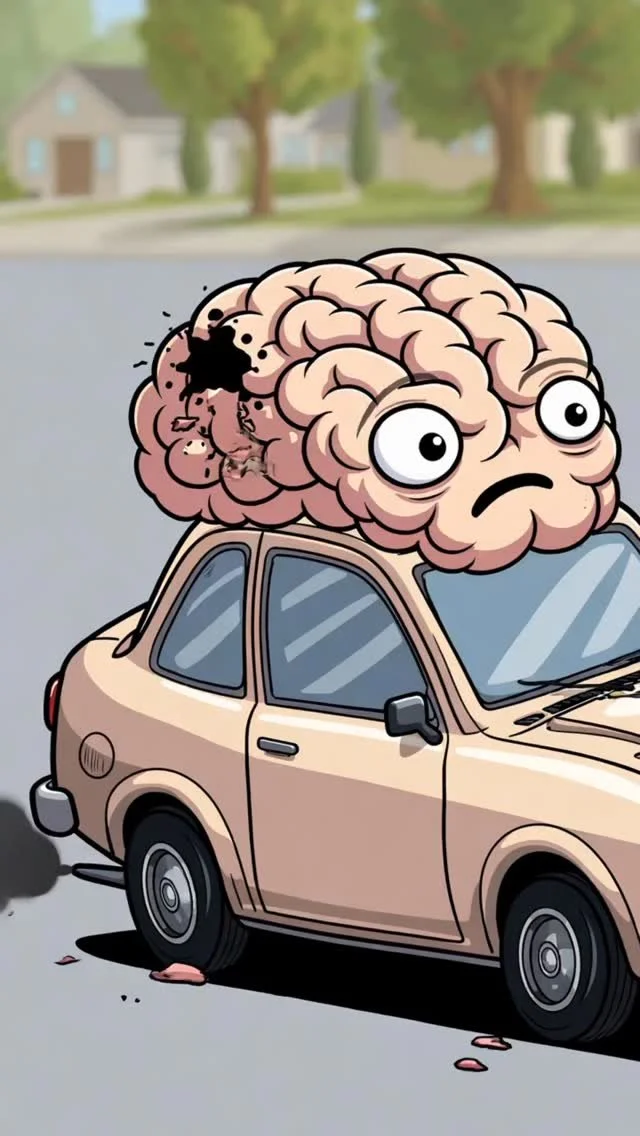
I woke up this morning with a pounding headache, my ears ringing loudly, and my vision blurred with strange spots floating across my sight. I read in my notes that those symptoms are all normal for this new life now. I remembered having them the night before too. It was the kind of morning I’ve grown used to since my brain injury. But something was different.
I had been in a vivid, detailed nightmare just before I woke up. Yet in the nightmare dream, there was no headache. No ringing. No visual disturbances. No fog. I was just… there, experiencing what was happening. Then I woke up, and all the familiar brain injury symptoms came rushing back. The contrast was jarring. I wanted to go back into the nightmare to escape the pain. Then it hit me, my notes don’t have anything about dreams. I checked with my wife. For the first time in three years, my brain had created and remembered a dream.
I spent the morning trying to process what had just happened. I’ve gone years without remembering a single dream if I’ve had them. Not one. And suddenly, last night, my brain did something it hasn’t done in a very long time.
I don’t know what it means.
I spent the morning reading everything I could find about dreaming and brain injury. What I learned is that changes in dreaming are actually quite common after traumatic brain injury. Studies have shown that a significant number of people with brain injuries report a complete or near-complete loss of dreaming. One recent study found that roughly 34.6% of brain injury patients said they don’t dream at all — a much higher rate than the 6–7% seen in the general population. The more severe the injury, the more likely someone was to experience this loss of dreams.
It’s still unclear whether the brain stops producing dreams or simply struggles to encode and remember them upon waking. What is known is that dreaming is closely tied to REM sleep, and many brain injuries disrupt REM and overall sleep architecture. Damage to areas involved in visual processing, emotion, and memory can also affect whether dreams are generated or recalled.
Some survivors report that dreaming returns or becomes more vivid as their brain heals and neuroplasticity does its work. Others say their dreams change in content or emotional tone. But it’s not a guaranteed sign of recovery, and it doesn’t mean all symptoms will disappear. Brains are complicated. Healing is rarely linear.
Still, I can’t help but feel a flicker of something like hope.
Even though I woke up with all the usual symptoms — the headache, the tinnitus, the visual issues, the fatigue, the aphasia — for a little while last night, my brain created a world without them in my mind as I slept. That feels significant. Not because it proves I’m “fixed,” but because it shows my brain is doing something different than it has been for the last three years.
I don’t know if I’ll dream again tonight. I’m trying not to get my hopes too high. But I’m also trying to stay open to whatever small steps my brain is offering.
Maybe this was a one-time thing. Maybe it’s the beginning of something shifting. Either way, I’m grateful for the reminder that even in the middle of ongoing symptoms, my brain is still capable of change.
And for one night, at least, it gave me a break from the constant noise, even if it was just to enter into a different nightmare.



Disclaimer: I am not a medical professional. This blog reflects my personal experience and general information I found through research. It is not intended as medical advice. Brain injuries affect everyone differently, and symptoms and recovery can vary widely. Please consult your doctor or a qualified healthcare provider for personalized medical advice regarding your symptoms or condition.