
Manure, Sweat, and Surrender
Today I stepped outside with every intention of being useful. Just a simple chore—shoveling manure on our small farm. Something I used to be able to do for hours without thinking twice. Five minutes. That’s all it took today.
My arms burned. My legs turned to lead. The world started spinning. A pounding headache slammed into my skull. Sweat poured down my forehead, stinging my eyes, dripping off my face, soaking my shirt until it clung to my back like a second skin. And it was only 75 degrees outside. Not even hot by most standards.
I had to stop. Had to sit down, head between my knees, waiting for the dizziness to pass. Once again, my body had issued a hard stop I never asked for.
The Invisible Limits No One Sees
This is life after traumatic brain injury. What looks like laziness or weakness to the outside world is actually your nervous system screaming for mercy. Simple physical tasks that once built character now break you in minutes. And the frustration of that reality never gets easier.
Post-TBI fatigue isn’t normal tiredness. It’s a profound, cellular-level exhaustion. The injured brain has to work much harder to do everything—process information, regulate movement, maintain balance. This inefficiency burns through energy reserves at an alarming rate. On top of that, many of us deal with autonomic dysfunction (dysautonomia), where the brain can no longer properly regulate heart rate, blood pressure, and body temperature.
That’s why 75 degrees feels like 95. That’s why sweat pours off you while your body overheats and your blood pressure fluctuates. Dizziness and spinning sensations often come from vestibular damage or disrupted blood flow to the brain during exertion. The pounding headache? A classic exertion-triggered migraine or tension response common after brain injury.
Pushing through doesn’t build strength—it usually makes everything worse the next day (or week).
Grieving the Husband and Father You Wanted to Be
The hardest part isn’t just the physical failure. It’s what it represents.
I want to be the husband who lightens my wife’s load. The one who keeps the yard maintained, helps with farm chores, and takes care of the heavy lifting so she doesn’t have to. Instead, she watches me come inside defeated after a few minutes of work, drenched in sweat and barely able to think straight, walk, or talk.
I want to be the dad who plays sports with my kids, runs around with them, teaches them how to do things the way my father taught me. I want to be present and capable—for their games, their projects, their everyday adventures. But many days I can’t. The energy isn’t there. The balance isn’t there. The stamina is gone.
Accepting that you are now disabled—even if it’s invisible—is a brutal, ongoing grief process. Every time I sit on the sidelines or have to call it quits on a chore, it feels like I’m failing the people I love most. I had built a life with my beloved where I could provide, protect, and participate fully. That version of our life is no longer sustainable, and admitting that breaks my heart over and over again.
The Loneliness of the New Normal
There are hours spent in tears. Quiet, private tears where I wrestle with guilt for disappointing my family even though I’m trying so hard. I want nothing more than to love them through action—through doing things for them and with them. But my brain and body keep saying no.
The outside world doesn’t see it. Neighbors, friends, and strangers still expect the old version of you. They don’t understand why the yard looks a little rougher or why you’re not out there every weekend like before. There’s little grace for the invisible disability that turned a capable man into someone who has to carefully ration his energy like a precious resource.
This new life feels lonely. Even surrounded by my wife and kids I love, there’s an isolating grief in knowing you can no longer contribute the way you once did. The man you were before the injury feels like a ghost—someone you mourn while trying to become someone new.
Learning to Carry What You Can
I’m still figuring out how to accept this without letting it define every part of me. Some days acceptance feels like surrender. Other days it feels like wisdom—protecting my brain so I can show up in the ways I still can: with words, with presence, with love that doesn’t require physical strength.
If you’re living this too—whether you’re the one with the injury or loving someone who is—please know the struggle is real and the grief is valid. The tears, the frustration, the sweat-soaked defeats in the middle of simple chores… they matter.
You’re not less of a husband, father, or partner because your body and brain have limits now. You’re carrying an invisible weight most people will never understand.
And on the days when five minutes of shoveling manure is all you can give, that effort still counts. It’s still love in action.
To my wife and kids: I’m sorry for the ways this injury limits me. Thank you for loving me through the disappointment and the tears. I’m still here, still fighting, still loving you with everything I have left.
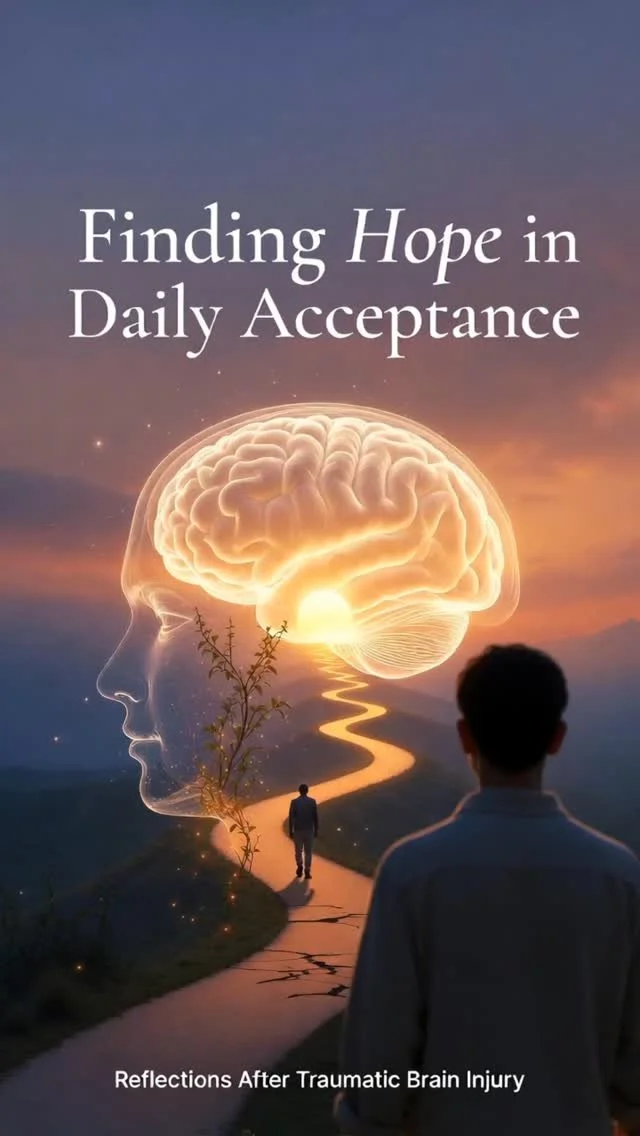




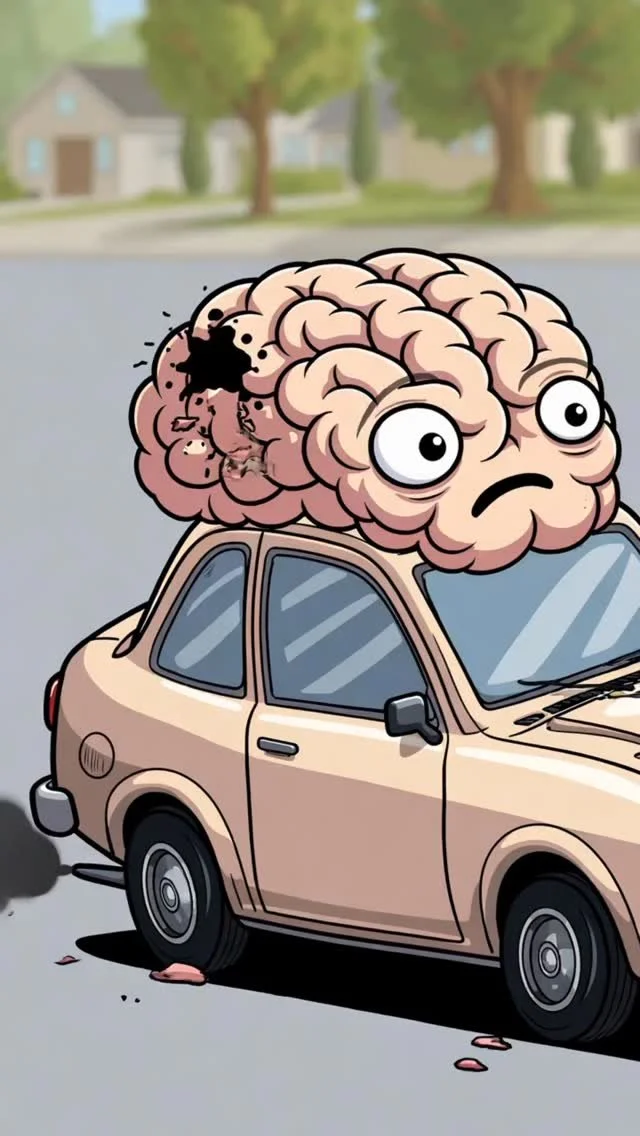

Autonomic Dysfunction After TBI: The Science Behind the Invisible Limits
Autonomic dysfunction (also called dysautonomia) is one of the most common yet under-recognized complications after traumatic brain injury (TBI), including mild cases. More than 70 million people worldwide have some form of dysautonomia. It explains why simple tasks—like shoveling manure on a mild 75°F day—can quickly lead to drenching sweat, dizziness, pounding headaches, rapid fatigue, and a spinning world.
What Is the Autonomic Nervous System (ANS)?
The ANS is the part of your nervous system that controls involuntary functions you don’t have to think about:
Heart rate and blood pressure
Body temperature regulation and sweating
Breathing rate
Digestion
Blood flow (including to the brain)
Stress response (fight-or-flight via the sympathetic branch)
It has two main branches:
Sympathetic — “Accelerator” (increases heart rate, blood pressure, sweating, alertness)
Parasympathetic — “Brakes” (calms things down, promotes rest and recovery)
Normally, these branches work in balance. After TBI, that balance is often disrupted.
How TBI Causes Autonomic Dysfunction
TBI can damage or disconnect key brain regions that regulate the ANS, including:
Hypothalamus — Master regulator of temperature, hormones, and autonomic control
Brainstem (medulla, nucleus tractus solitarius) — Controls heart rate, blood pressure, and breathing
Insula and anterior cingulate cortex — Integration hubs for autonomic signals
Diffuse axonal injury — Shears connections throughout the brain’s autonomic networks
This often results in sympathetic dominance or hyperactivity: the “fight-or-flight” system stays overactive and struggles to turn off. In severe cases, this manifests as Paroxysmal Sympathetic Hyperactivity (PSH) — sudden “storms” of elevated heart rate, blood pressure, temperature, sweating, and agitation.
Even in milder TBIs, the dysregulation can be subtler but chronic: impaired baroreflex sensitivity (the body’s ability to adjust blood pressure and heart rate), reduced heart rate variability (HRV), and poor cerebral blood flow regulation during exertion.
Why Exertion Triggers Rapid Symptoms
During physical activity:
Your brain and body demand more oxygen and blood flow.
An injured autonomic system can’t efficiently regulate heart rate, blood pressure, or vessel dilation.
This leads to exertional intolerance: quick overheating, excessive sweating (hyperhidrosis), dizziness/vertigo (from blood pressure fluctuations or vestibular involvement), and headaches (from blood flow changes or migraine-like responses).
The brain works harder overall post-TBI (inefficient neural processing), burning energy faster and worsening fatigue.
Even mild heat or effort can feel overwhelming because temperature regulation is impaired. Sweat pours as the body tries (and often fails) to cool down, while blood pressure swings contribute to the spinning sensation and pounding head.
Long-Term Impacts and Why It Feels So Limiting
Chronic autonomic issues contribute to:
Persistent fatigue and exercise intolerance
Orthostatic symptoms (dizziness on standing or exertion)
Poor stress tolerance
Sleep disturbances
Cognitive fog (reduced cerebral blood flow)
Emotional dysregulation (anxiety, irritability from constant sympathetic overdrive)
This directly undermines physical roles — as a husband helping with farm/yard work, or as a father playing sports with kids — because the body simply can’t sustain the output it once could. Pushing through often leads to crashes that last hours or days.
Acceptance and Management
Science shows that autonomic dysfunction is treatable to some degree. Recovery of autonomic balance can improve symptoms, but for many it remains a lifelong adjustment.
Understanding the science — that this isn’t laziness, weakness, but a measurable physiological disruption from brain injury — is a powerful step toward self-compassion and explaining it to loved ones.
If you’re living with this, the limits are real, the grief is valid, and you’re far from alone. Research continues to illuminate these mechanisms, offering hope for better management.
Some sources:
Hope Survives video (Dr. Ryan Harvey) - https://www.youtube.com/watch?v=dB8_5WKpEh8
https://my.clevelandclinic.org/health/diseases/6004-dysautonomia
Esterov, Diana, and Brian D. Greenwald. “Autonomic Dysfunction after Mild Traumatic Brain Injury.” PM & R: The Journal of Injury, Function, and Rehabilitation, vol. 9, no. 9S2, Sept. 2017, pp. S352–S358. PMC, https://pmc.ncbi.nlm.nih.gov/articles/PMC5575620/.
Khalid, Faiq, et al. “Autonomic Dysfunction Following Traumatic Brain Injury: Translational Perspectives.” Neurosurgical Focus, vol. 47, no. 5, Nov. 2019, p. E8. Journal of Neurosurgery, https://thejns.org/focus/view/journals/neurosurg-focus/47/5/article-pE8.xml.
Purkayastha, Sushmita, et al. “Autonomic Nervous System Dysfunction in Mild Traumatic Brain Injury: A Review of Related Pathophysiology and Symptoms.” Brain Injury, vol. 33, no. 9, 2019, pp. 1129–1136.
Takahashi, Chie, et al. “Autonomic Dysfunction Syndromes after Acute Brain Injury.” Handbook of Clinical Neurology, vol. 128, 2015, pp. 539–552. PMC, https://pmc.ncbi.nlm.nih.gov/articles/PMC8101086/.
Wongsripuemtet, P., et al. “Early Autonomic Dysfunction in Traumatic Brain Injury: An Article Review on the Impact on Multiple Organ Dysfunction.” Journal of Clinical Medicine, vol. 14, no. 2, 2025, p. 557. MDPI, https://www.mdpi.com/2077-0383/14/2/557.