What is Your Name?
Last night, my wife showed me a video that came up in her feed of Vice President JD Vance appearing on The View. Politics aside, I was impressed by a few things. Despite everyone fighting to get their words in and constantly interrupting each other, he remained remarkably patient and truly listened to the others. It reminded me how, with a brain injury, the chaos of overlapping voices and group conversations often makes it hard for me to participate fully. I still try — mostly by listening — but it would be a gift if our culture shifted toward more mutual respect instead of constant interruption. Everyone deserves a chance to be heard, not just the loudest.
What stood out even more was how genuinely he called everyone by name in his responses. My wife then told me of a debate from the campaign trail a couple of years ago where he repeatedly addressed a moderator by name. Even now, years later, she still remembers that moderator’s name was “Margaret” because of how often, naturally, and respectfully he used it.
That conversation led her to show me several more clips. I learned about Hurricane Helene, the Hamas terrorist attack in October 2023, the Israeli response, and so many other major global and national events from the last three years — events that are part of my “missing years” with a memory that does not retain new information still well.
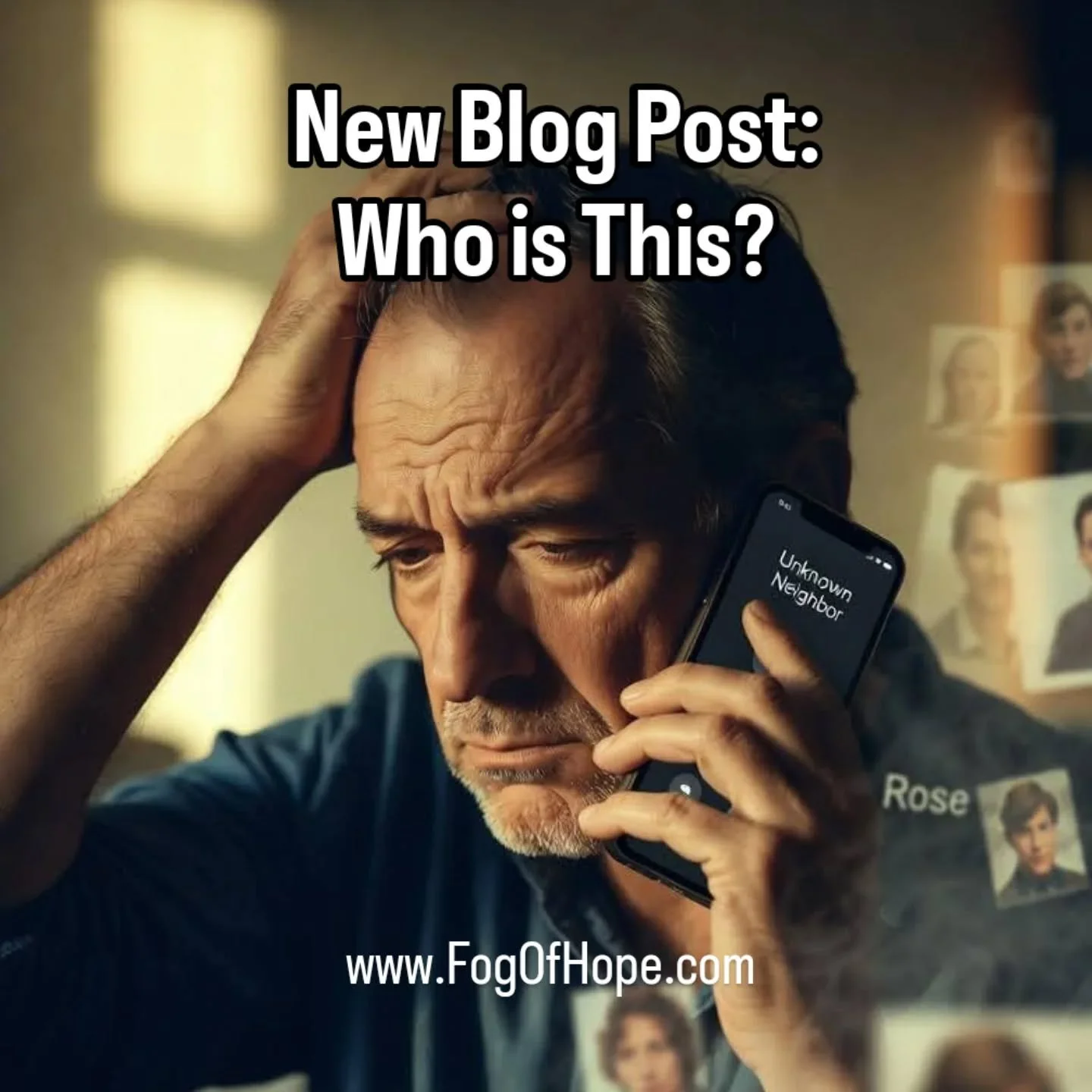
But what hurts more than not knowing the “events” is when my memory fails to hold the names of people — especially the names of those closest to me.
The Sacred Power of a Name
In Scripture, to know and call someone by name is an act of intimate love and recognition. The Lord says in Isaiah 43:1, “Do not fear, for I have redeemed you; I have called you by name, you are mine.” Jesus Himself shows the power of this personal call — speaking Mary’s name at the empty tomb, causing her heart to recognize Him instantly, or calling Saul by name on the road to Damascus, forever changing his life. In the Catholic tradition, we believe that names carry dignity and identity. To be known by name is to be truly seen, loved, and claimed. When my brain fails to produce the names of those I love most, I am reminded how profoundly sacred this simple act truly is — and how painful its absence can feel.
A Name, One of the Last Acts of Friendship
Perhaps that is why this reflection on the significance of knowing names feels so fitting too in the loss of one of the greatest people I had known. One of the last real acts of friendship and vulnerability we shared happened shortly after my injury. I had asked her about new friends she met at a college orientation. At first, she hesitated and didn’t share his name. But later that afternoon, while we were picking strawberries in the garden, she leaned over and quietly whispered his first name so I could pray for him.
That simple, tender act of sharing his name carried so much grace — more than I think she even realizes. In that moment, despite my brain injury and my hesitation with names, there was still a desire to connect, to pray, and to be together. She chose to trust me with something simple, yet personal - a first name. It was one of the final genuine exchanges of friendship we had. Weeks later, not a single conversation during a whole weekend together even without her having friend or work distractions. Years later, when she met her fiancé, she still couldn’t bring herself to share his name with me. By withholding his name, she made it clear she did not want me to know him. That simple refusal became a quiet but accurate reflection of the emotional distance and lack of friendship she wanted to create and maintain throughout these years as she built a relationship through engagement that not once involved our family knowing him or her.
Not the Normal Kind of Forgetfulness
I’ve had many times throughout my injury of forgetting people’s names. Before my brain injury, I was like most parents. I would run through the list of names when calling one of the kids: “Sarah — I mean, John — wait, Michael…” You know how it goes. In the rush of daily life, the names get jumbled for a second. Everyone laughs it off. It’s normal.
This is different.
This isn’t a mix-up in the moment. This is looking into the face of my own daughter — a child I have loved, held, and known deeply for years — and feeling a terrifying blank space where her name should be. I know her. I know her laugh, her personality, her place in our family. But sometimes the connection between her face and her name simply doesn’t fire. The dots won’t connect.
It’s one thing to meet a new baby born in the last three years and not recognize them — that’s a painful but understandable consequence of the injury and lost time. But looking into the eyes of a child I’ve known since birth and failing to immediately connect her face with her name? That cuts to the core of who I am as a father.
That gap is devastating.
Beyond the family, in everyday, uncontrolled social settings — shopping at the grocery store, attending church, or being out in the community — I frequently come across people whose faces feel familiar. There’s a vague recognition, a sense that I should know them, but the name is completely gone. This creates a painful and awkward dilemma every single time: Do I admit my ignorance and ask for their name, risking that I’m offending someone I’ve known for years? Or do I pretend I remember them and try to navigate the conversation carefully, hoping their name or context will come back to me?
The uncertainty is exhausting. Every interaction becomes a quiet test of my damaged memory, and the fear of hurting or disappointing people I care about (or once knew) adds another layer of stress to simply existing in public.
A Small Strategy of Love
To fight back in small ways, I’ve been creating a family memory book — a simple photo album with pictures of each family member, their names, and a few special facts about them. Every morning, I spend time studying it. Reviewing faces. Saying names out loud. Trying to strengthen those damaged pathways.
It feels humbling to need this kind of tool, but it’s an act of love.
Still Fighting for Connection
This injury has taken many things, but it hasn’t taken my heart for my family. Even when the name doesn’t come right away, my love remains complete and unwavering. It lives deeper than memory.
We keep going. We keep loving. We keep fighting for connection, no matter what the brain tries to take away.